Apple Vision Pro — UX Motion System
- Role
- Principal UX Motion Designer
- Focus
Applying system timing tokens to real interface elements
- Motion Scope
- Micro-interactions
- State changes
- UI confirmations
- Timing System
- Fast (120ms)
- Medium (240ms)
- Slow (480ms)
- Tools

Motion Defines Hierarchy
Spatial Depth Not Zoom
Rhythm Hierarchy
Timing as Emotion
Hero Choreography
Album Card Motion System
Spatial Depth Not Zoom
Rhythm Hierarchy
Timing as Emotion
Light Sweep
System at rest
Motion disappears when it’s no longer needed, allowing the interface to remain calm, clear, and unobtrusive.
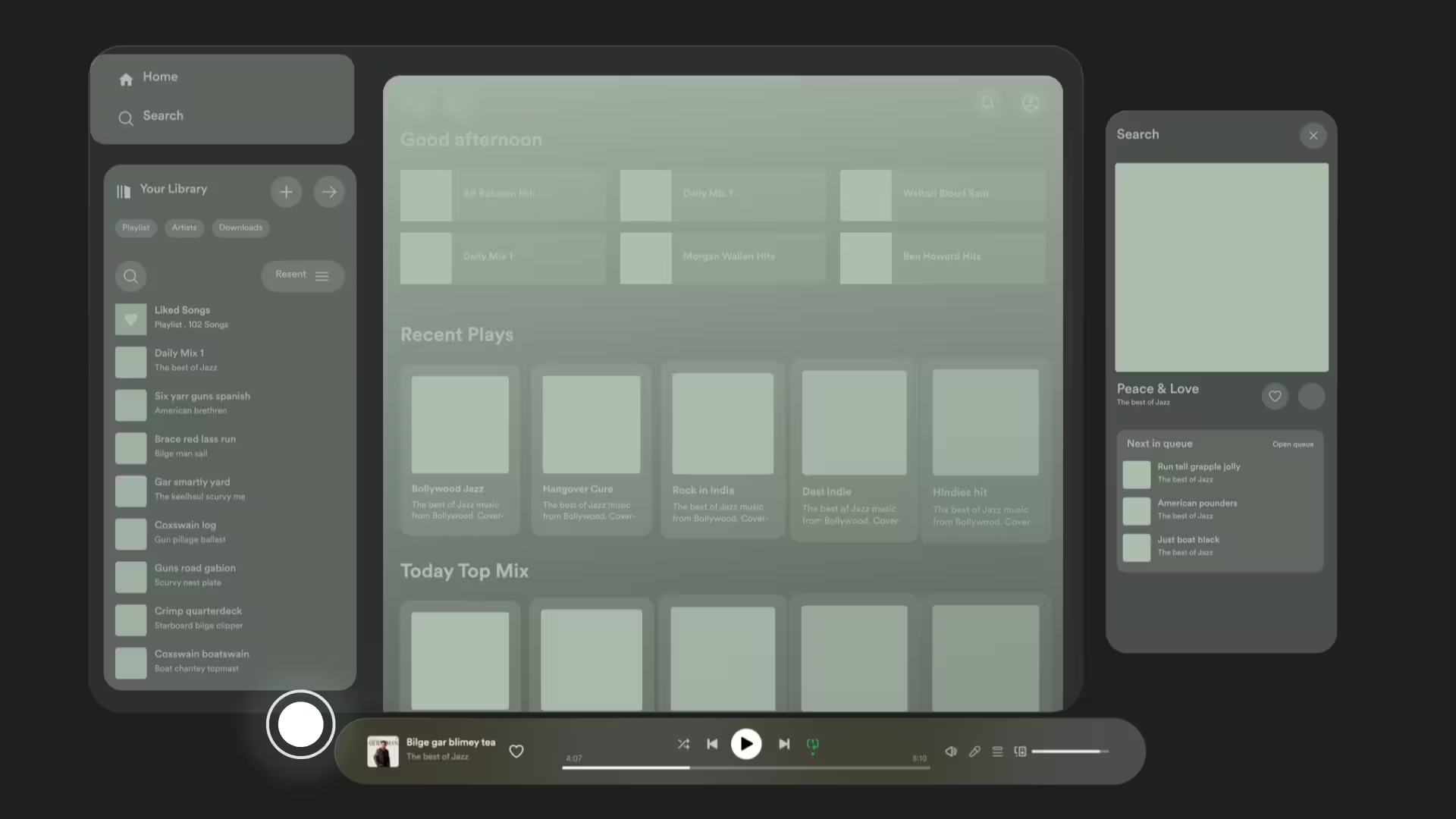
Contextual Depth & Focus Priority
predictive path & system awareness
Motion System Breakdown
Principles
The foundational rules that govern how motion behaves across the system—defining when elements move, how they transition, and how timing, depth, and hierarchy work together to guide attention with restraint.
Timing Map
Applied Motion
Reel



.jpg)


1
Build Overview


2
Creative Rationale
Goal
- Explore how motion reinforces spatial depth and hierarchy in visionOS.
- Showcase natural, fluid panel transitions that mirror Apple’s design language.
- Create immersive interactions that make music exploration intuitive and delightful.
Process
Key Highlights
Detailed Insights
Deep Dives
Learning Science
Timing as Emotion
2
Creative Rationale
Goal
Challenges
Process
Impact and Results
Measurable Outcomes
Takeaways
1
The brief
Goal
- Explore how motion reinforces spatial depth and hierarchy in visionOS.
- Showcase natural, fluid panel transitions that mirror Apple’s design language.
- Create immersive interactions that make music exploration intuitive and delightful.
Challenges
- Designing motion that feels subtle, not distracting, in a mixed-reality environment.
- Ensuring UI readability while integrating 3D spatial layers.
- Balancing rich ambient visuals with performance-friendly motion.
Learning Objectives
Rhythm as Hierarchy
Learning Science
Timing as Emotion
Learning Methodolgy
- Fast (120ms)
- Medium (240ms)
- Slow (480ms)
Process
Impact and Results
Depth Parallax
Measurable Outcomes
Grid Reveal
Takeaways
Hover Float
Accessibility & inclusion
Light Sweep

3
Results
Apple Vision Pro – Spotify UI
No items found.


Apple Vision Pro – Spotify UI
No items found.
.avif)
.jpg)

.jpg)