BLOODLINE
A Martial Arts Fighting Game
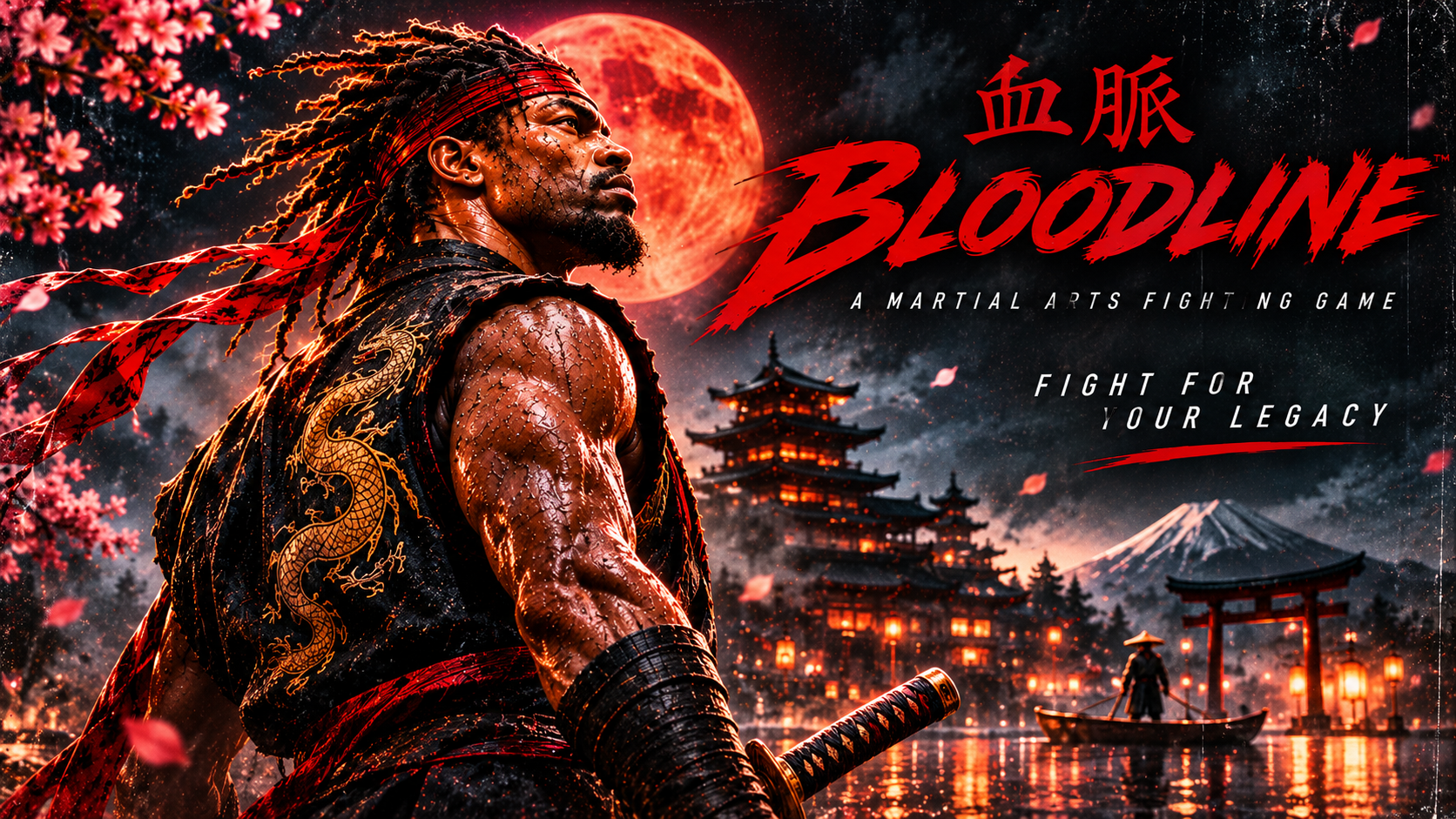
Entertainment branding, cinematic art direction and world-building.
01 / Project overview
A legacy earned.
A world built.
An independent entertainment branding concept exploring the intersection of martial arts cinema, character-driven storytelling and contemporary fighting games.
- Project
- Video game brand identity
- Creative scope
- Brand strategy, narrative development, visual identity and art direction
- Applications
- Characters, game UI, packaging, campaign and digital concepts
Creative development by Jesse Mercado, with AI-assisted image production. Concept artwork and interface studies; no released game or commissioned campaign.
02 / Creative challenge
A story with
the scale of a franchise.
How do you turn an original martial arts story into a cohesive entertainment franchise? BLOODLINE explores that question through a visual system designed to connect the emotional depth of its protagonist’s journey with the energy of a competitive fighting game.
03 / Concept and positioning
Inheritance is more
than blood.
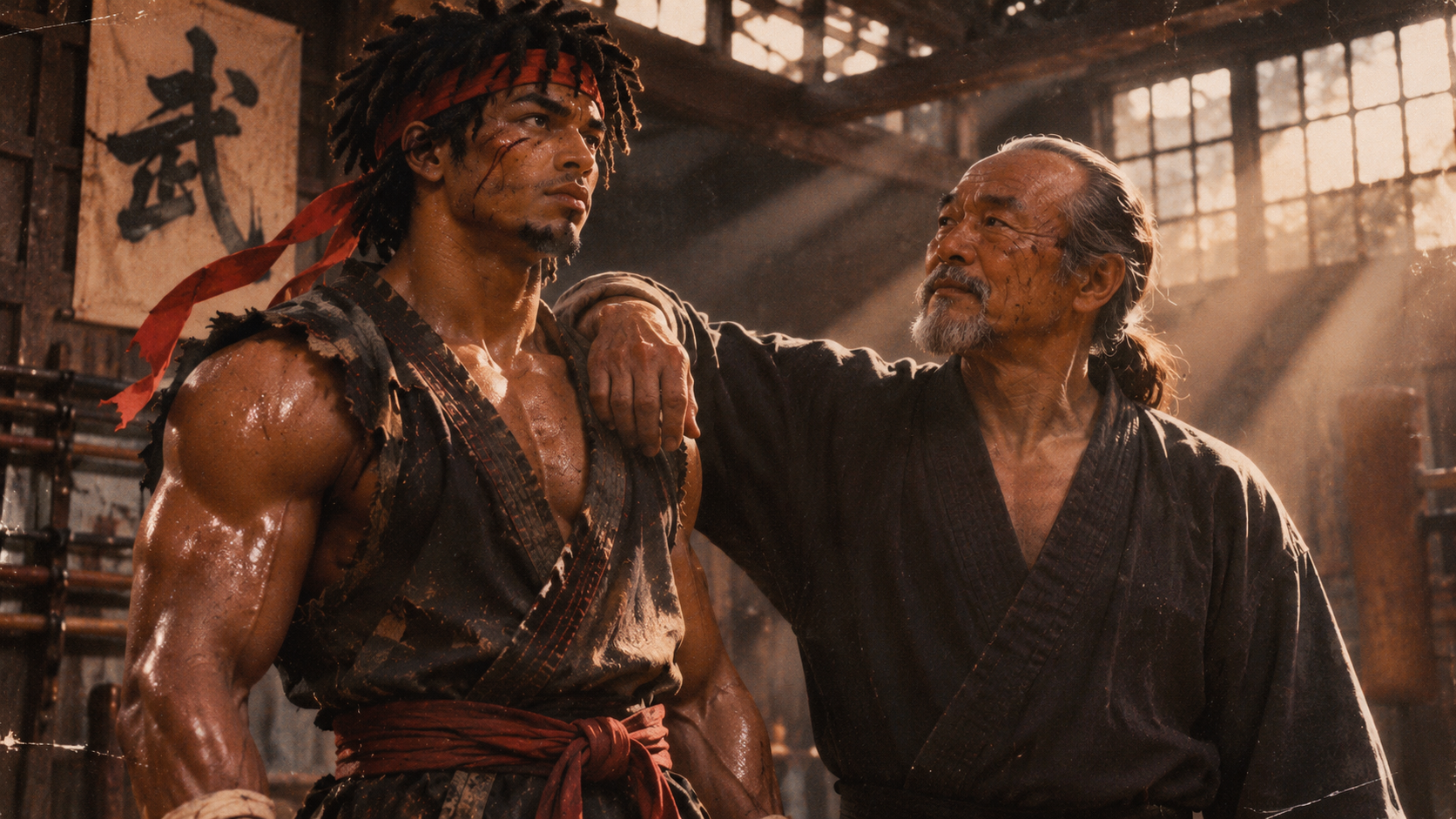
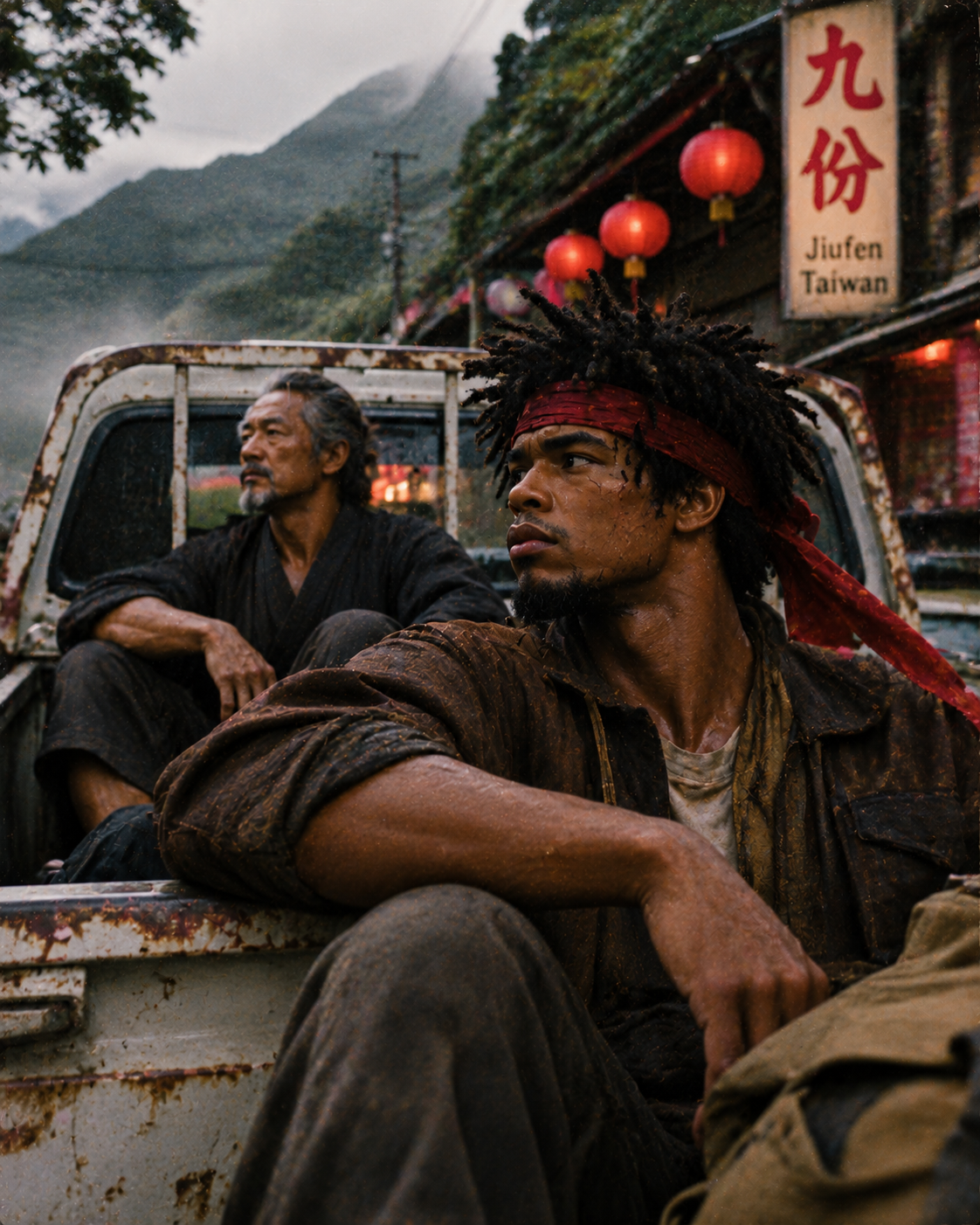
At the heart of BLOODLINE is a Nigerian-American fighter and the Japanese sensei who becomes his father figure. Their relationship reframes inheritance: identity is shaped by where we come from and what we choose to carry forward.
The proposition
Legacy earned through discipline and choices. A personal story becomes the foundation for an expansive fighting-game world.
The creative influences
Bloodsport, The Last Dragon and classic martial arts cinema meet Street Fighter, Japanese anime, The Boondocks and the graphic energy of Spider-Verse.
Creative references inform the direction; no licensed affiliation is implied.
04 / Visual identity
Movement. Discipline.
Recognition.
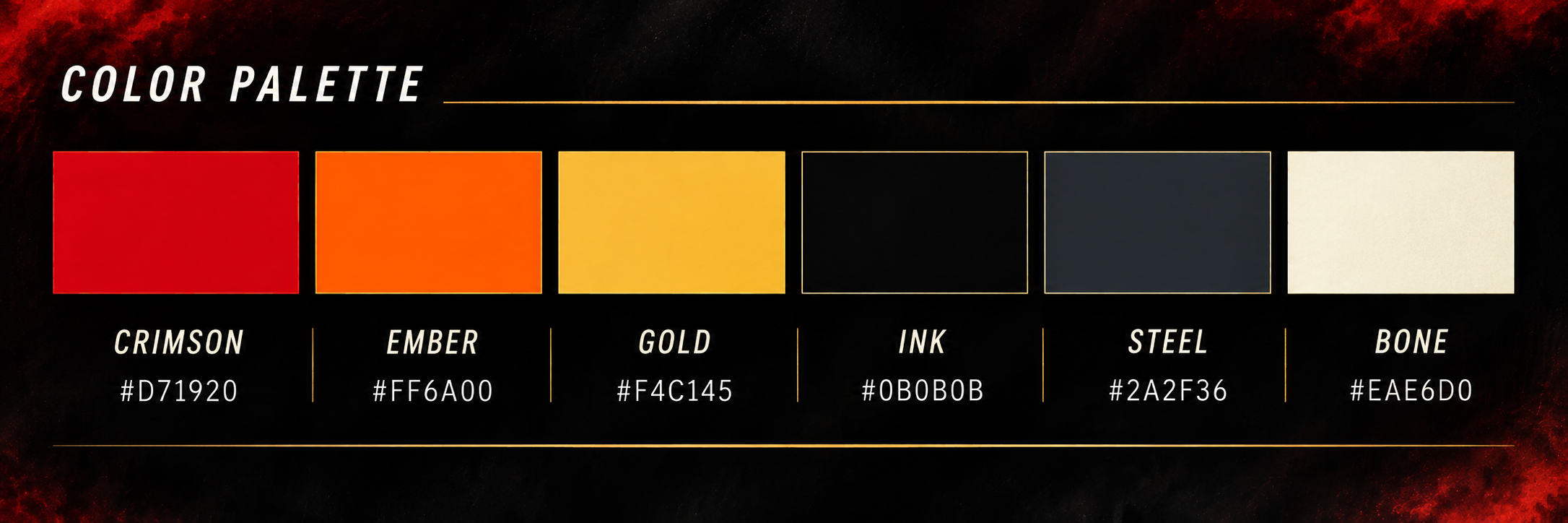
A flexible identity built from brush lettering, ceremonial symbolism and a restrained cinematic palette. Each element has a role, from the title on a cover to the smallest fighter emblem.
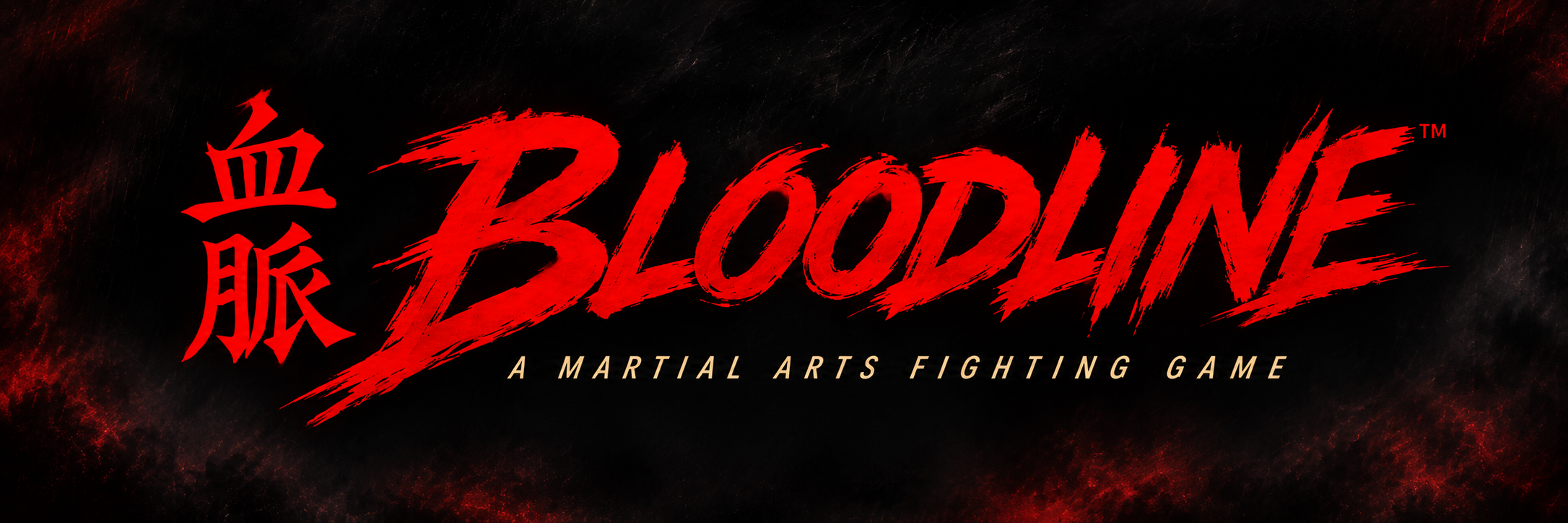
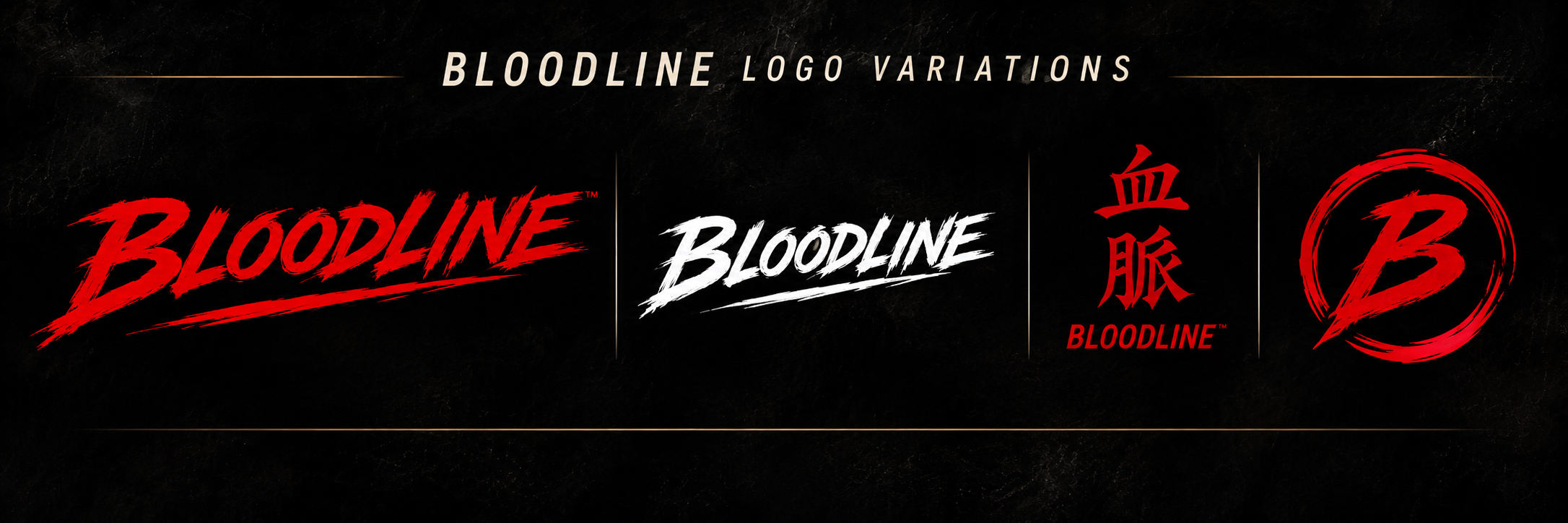

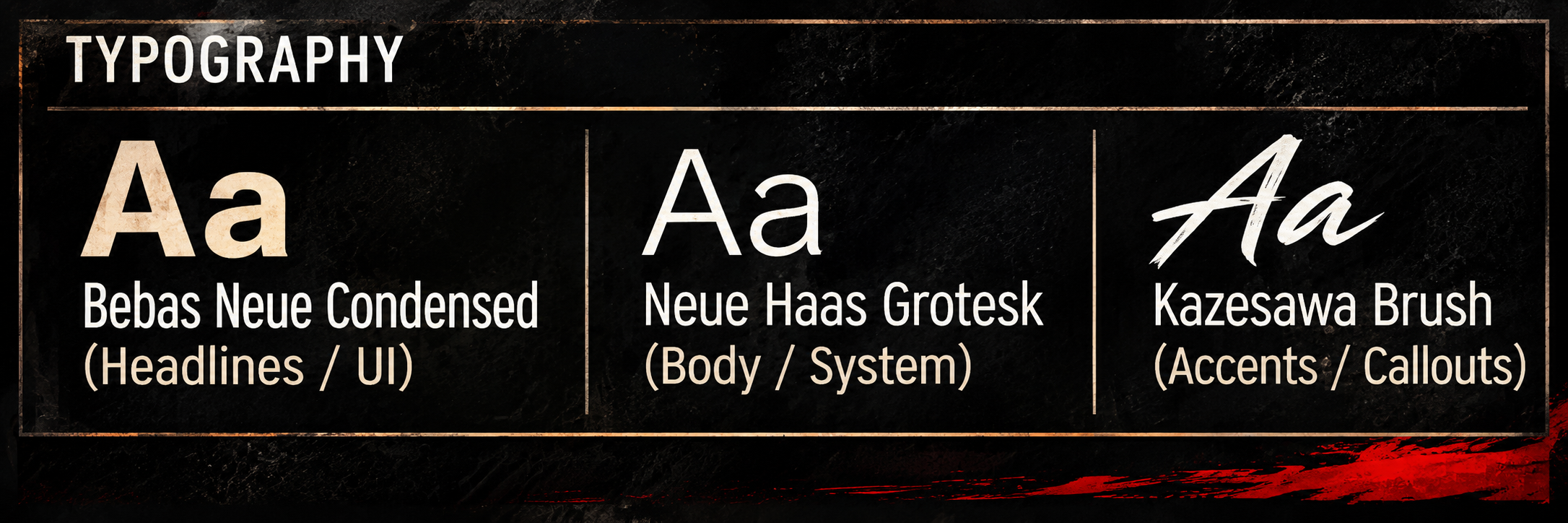
Type specimens communicate the visual direction; final font production and licensing remain to be confirmed.


Individual fighting identities.
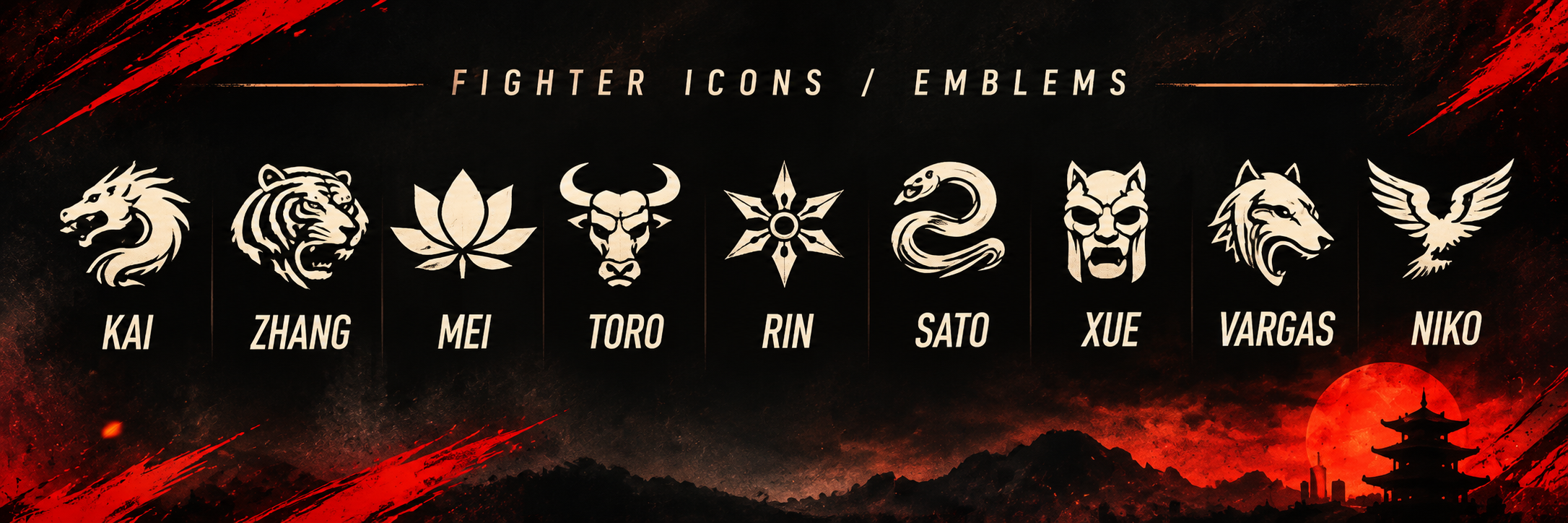
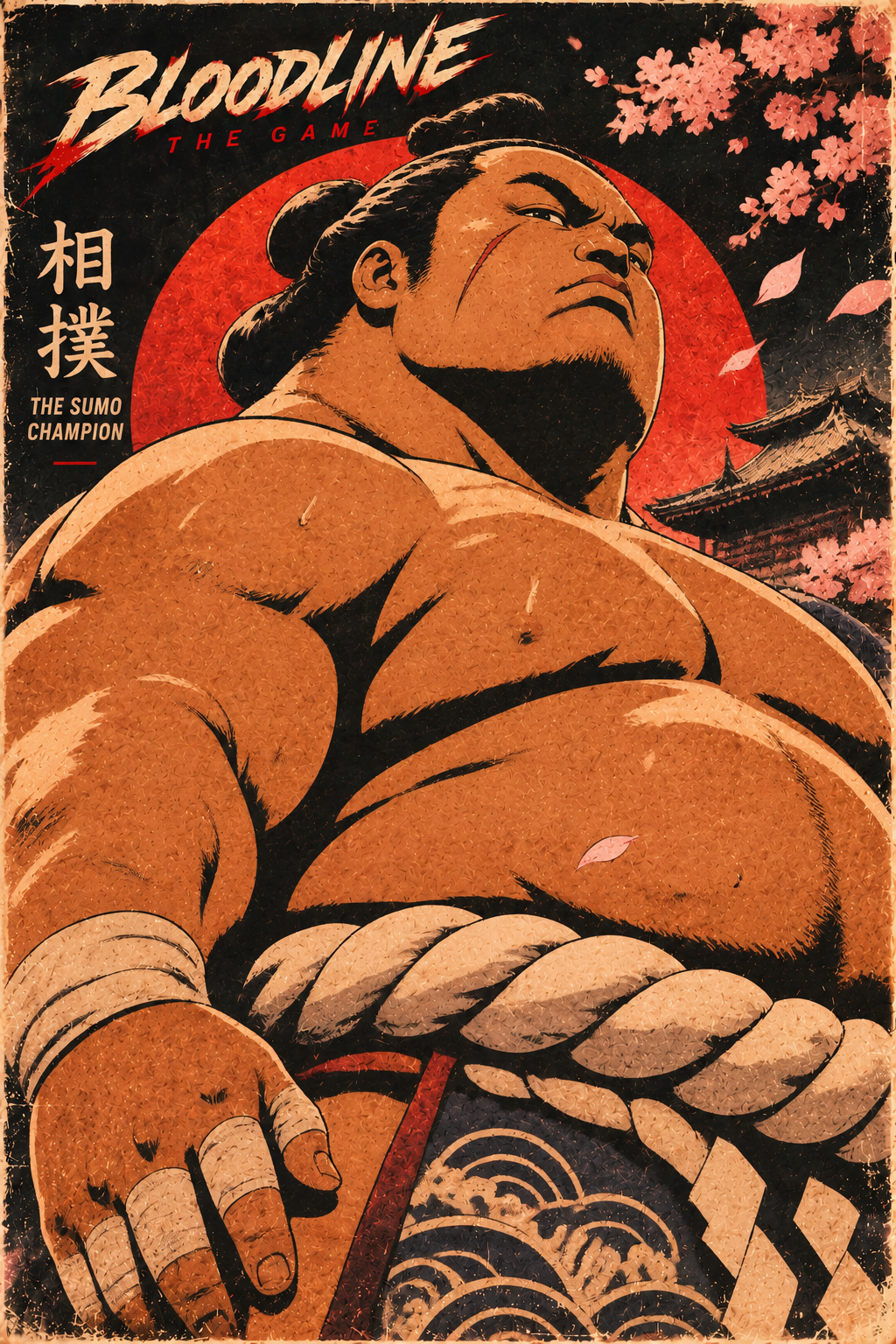
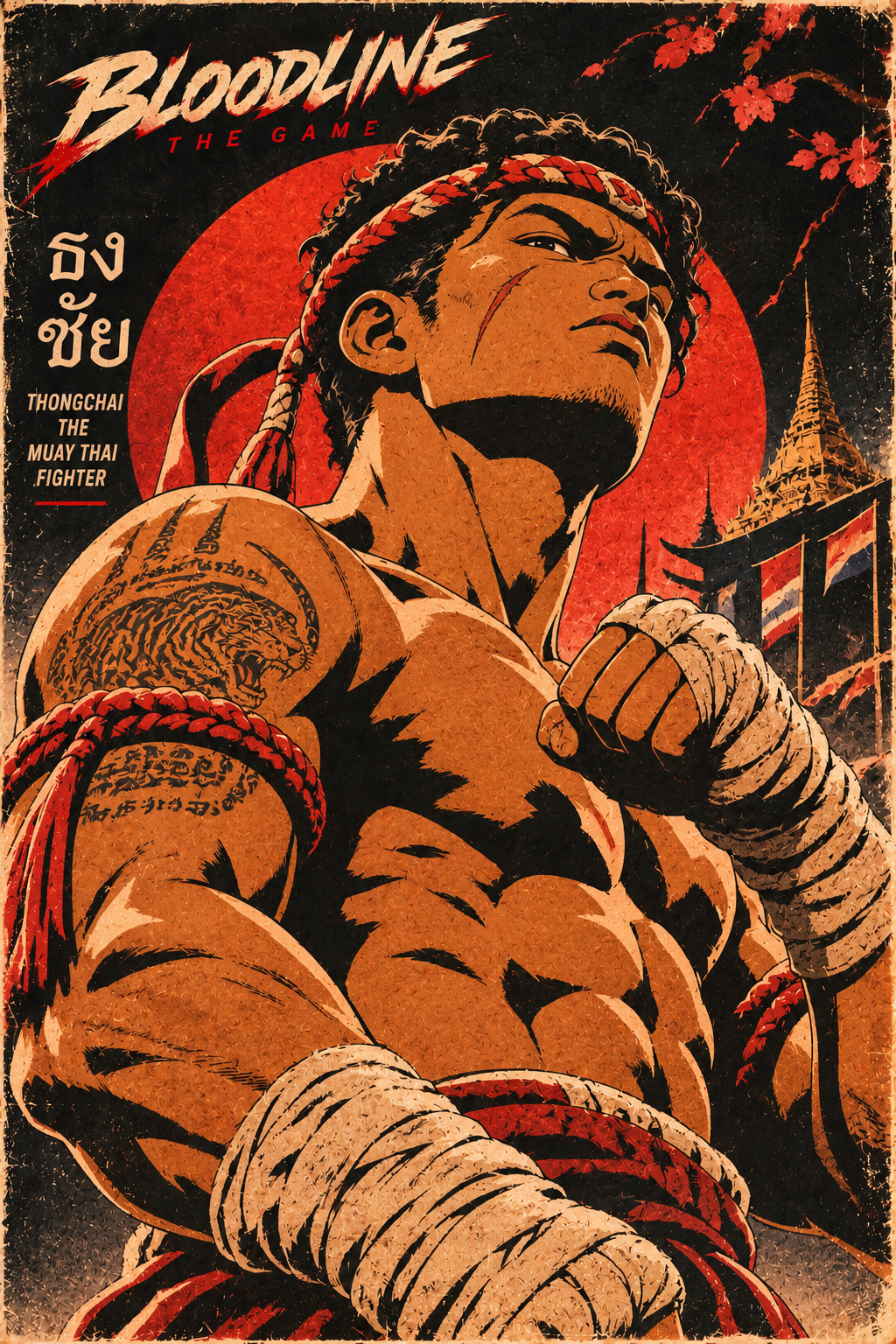
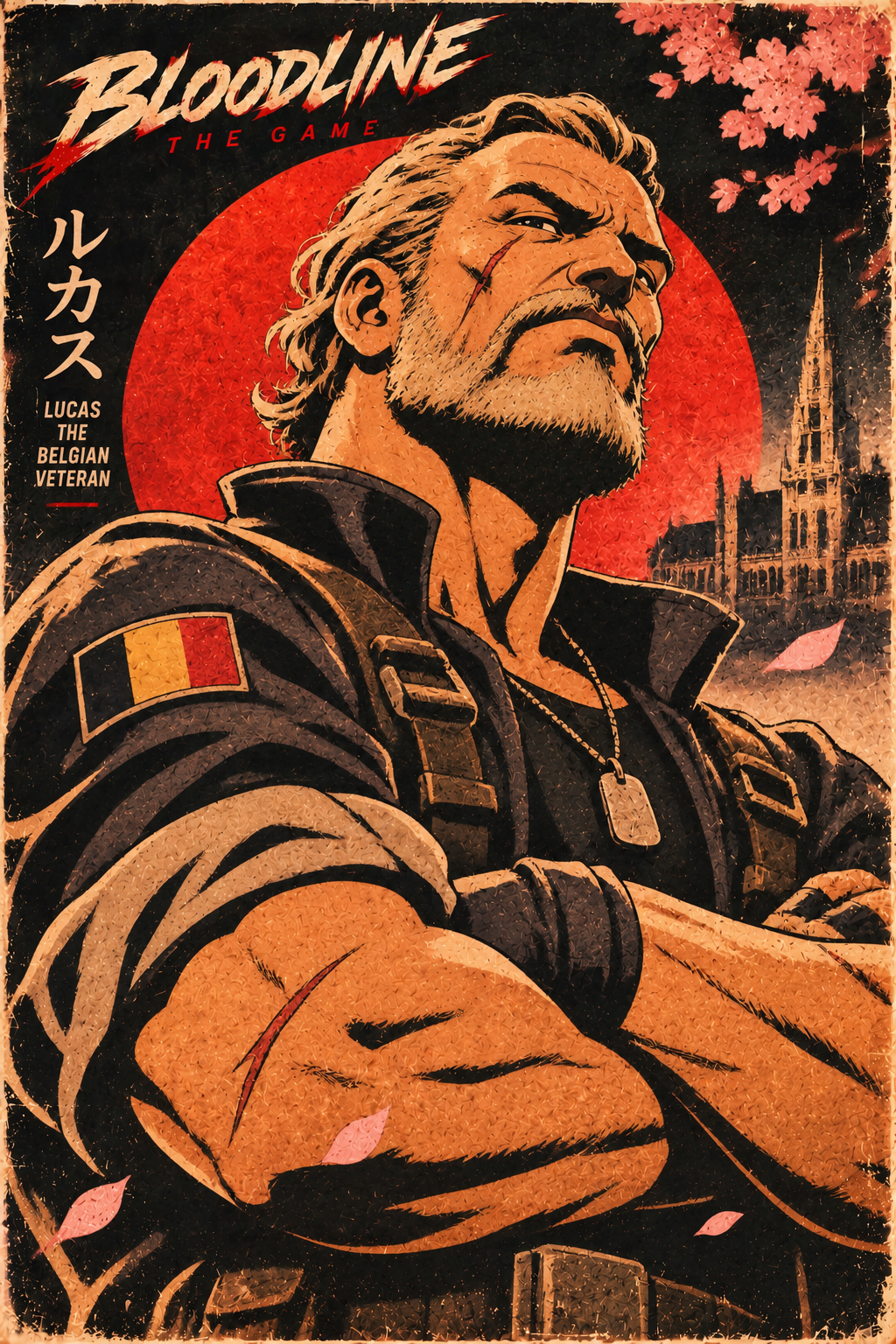
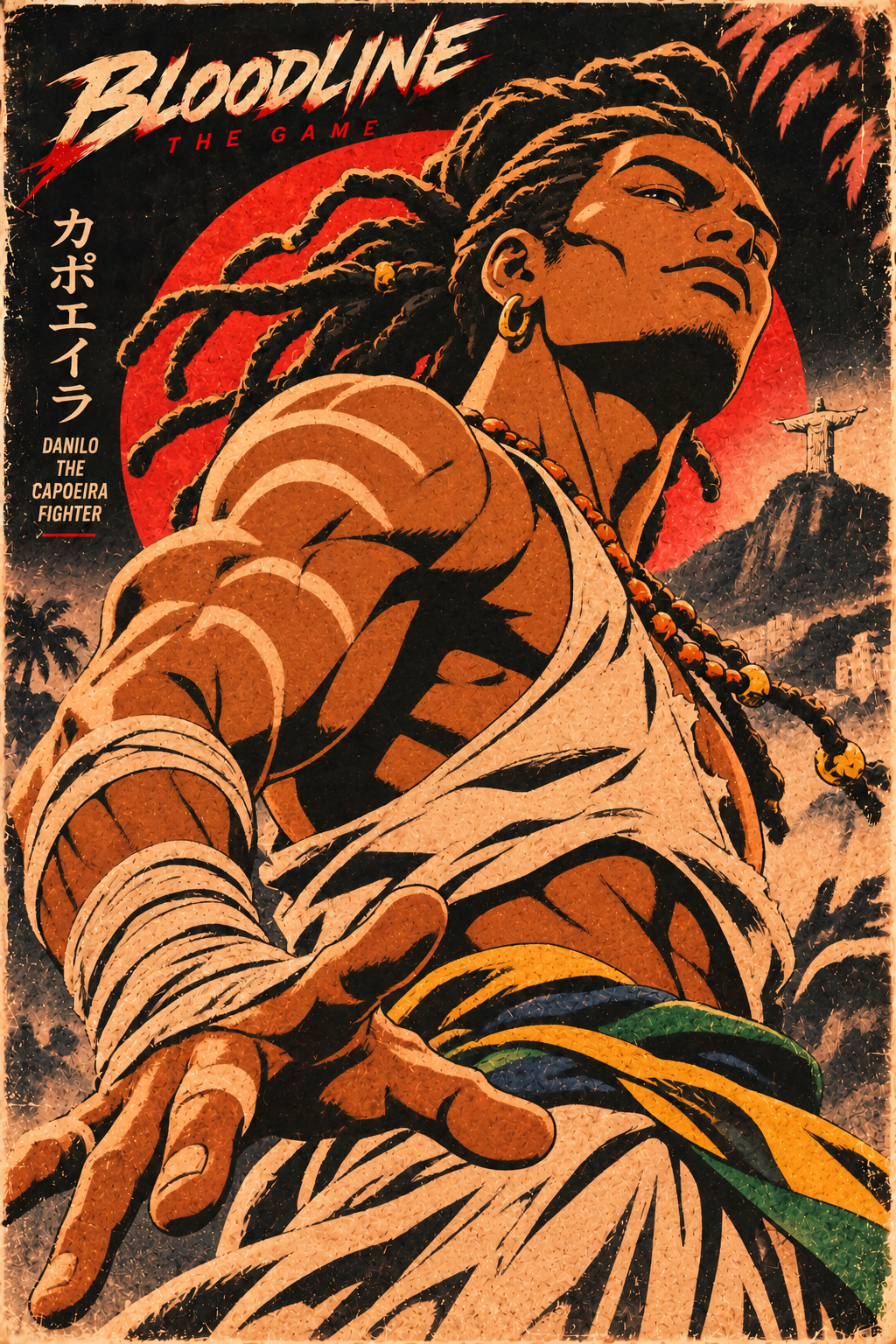
Names printed in concept artwork are working identifiers. The roster below uses the established character roles.
05 / Origin story and sensei
A father through teaching.
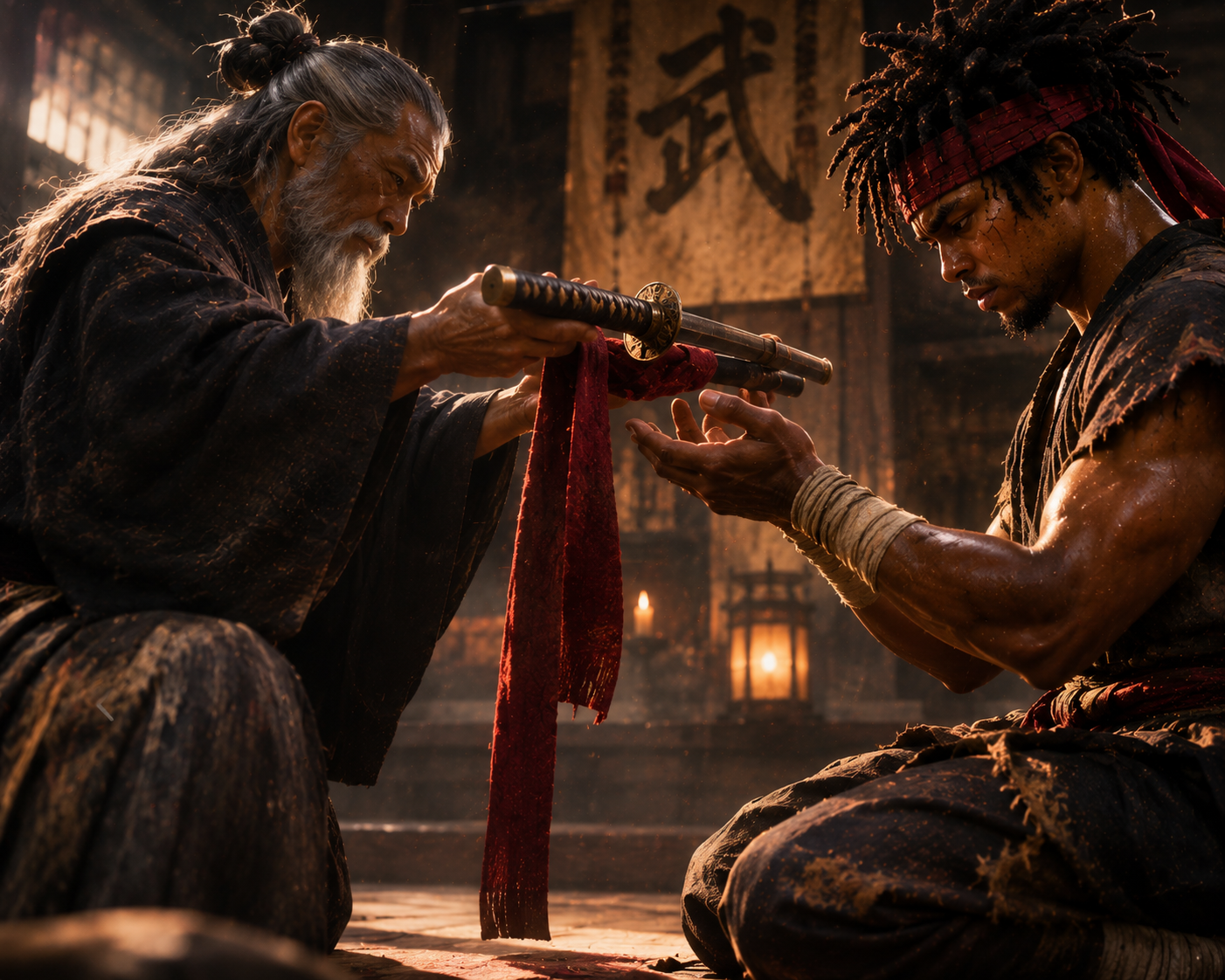
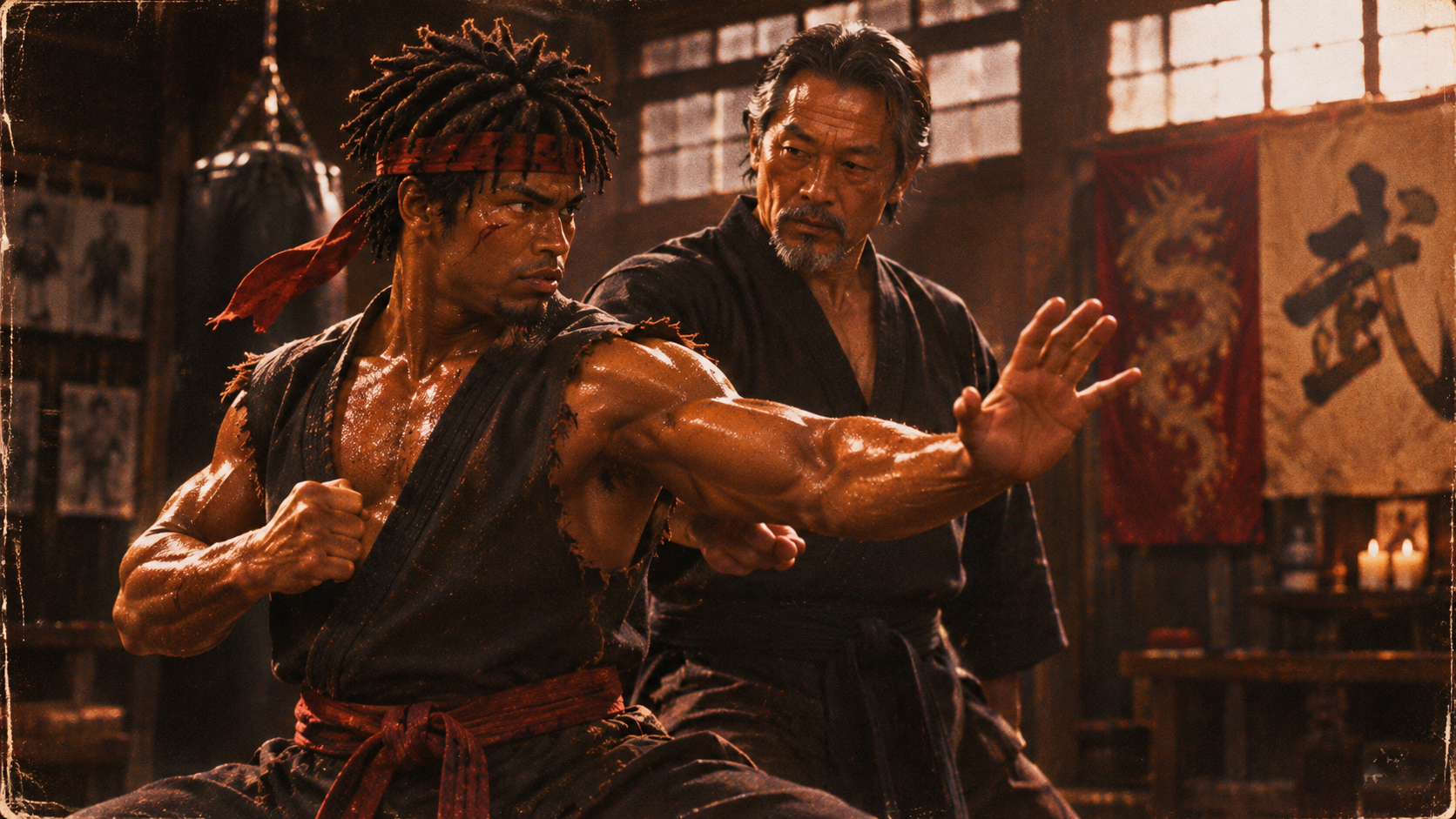
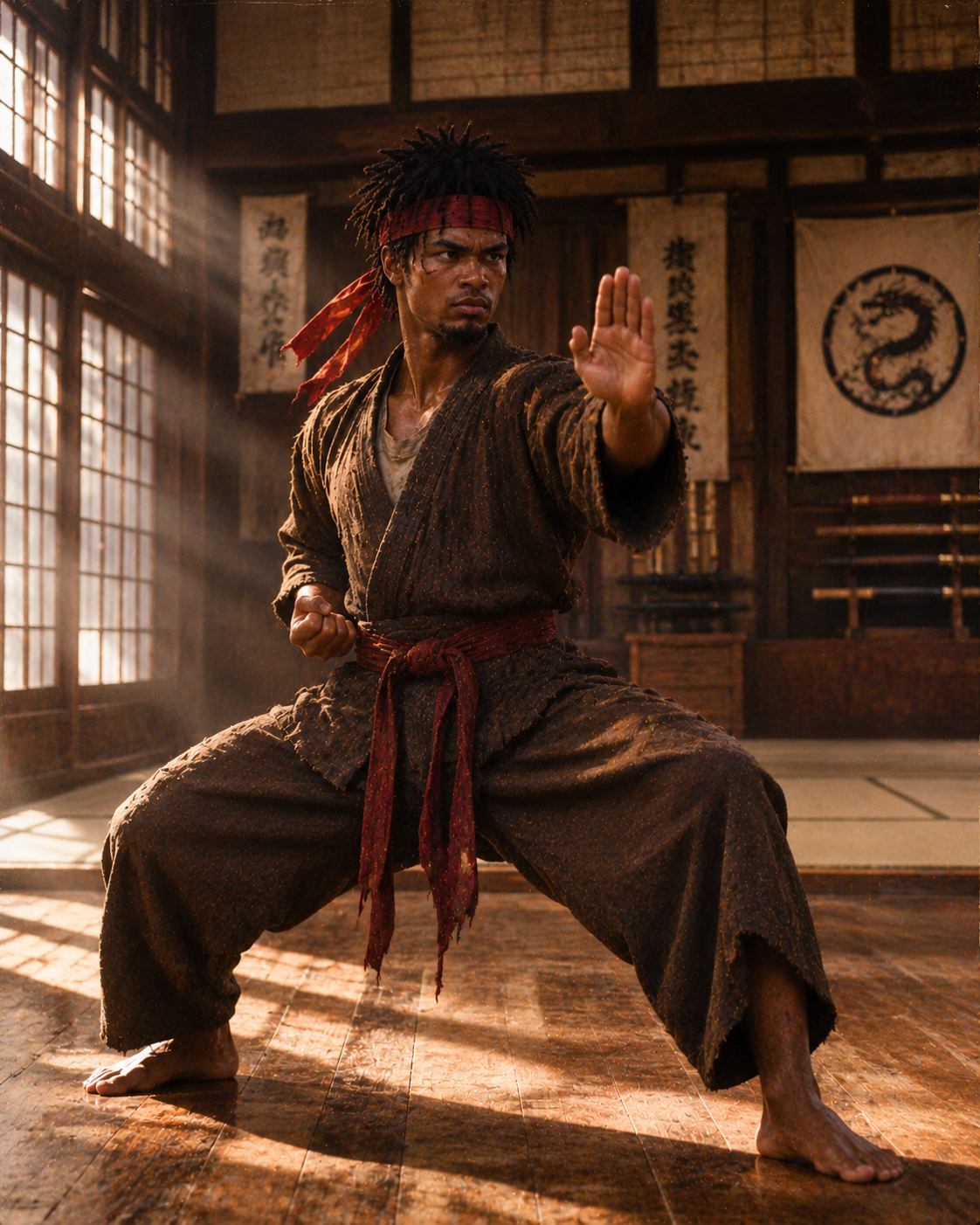
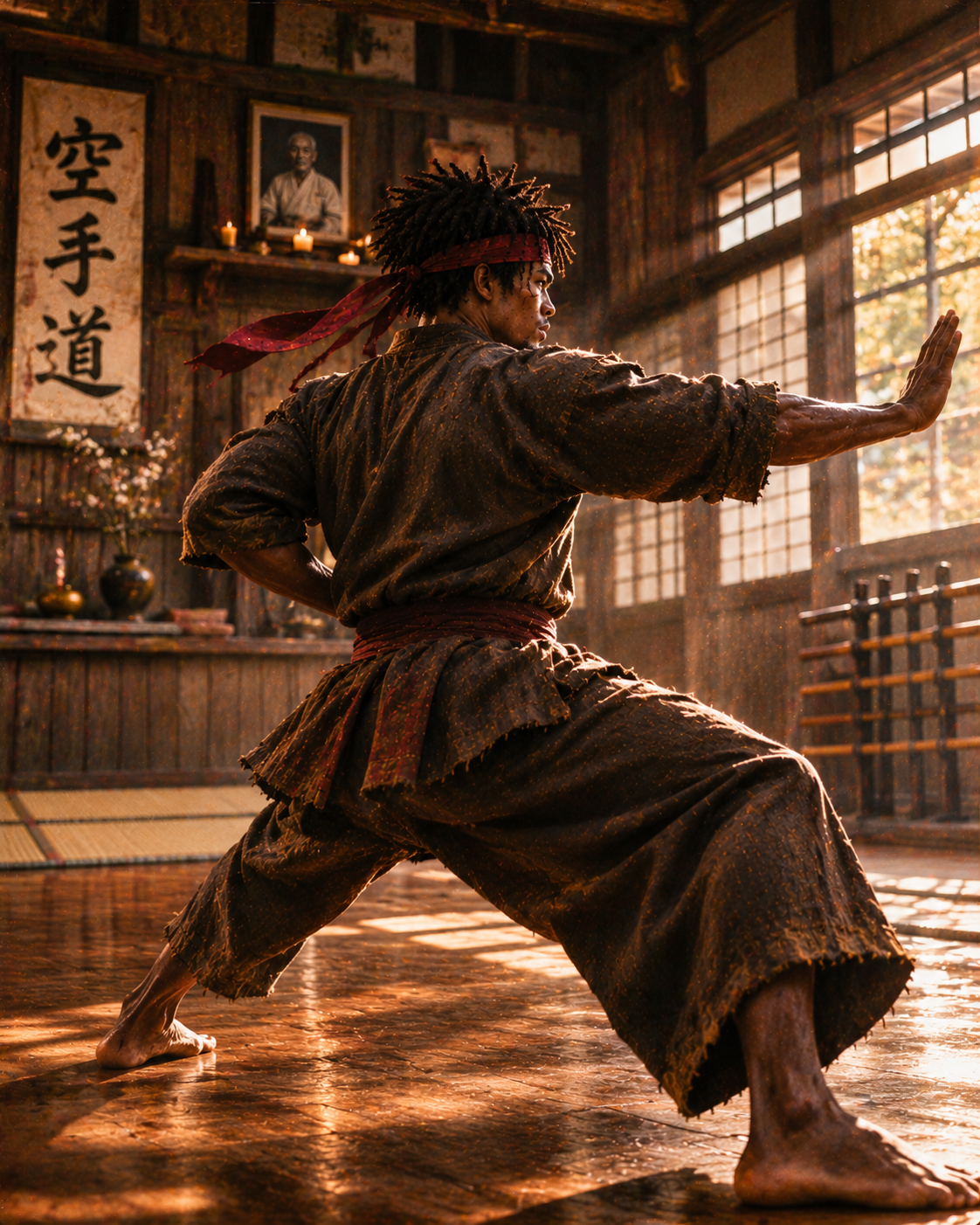
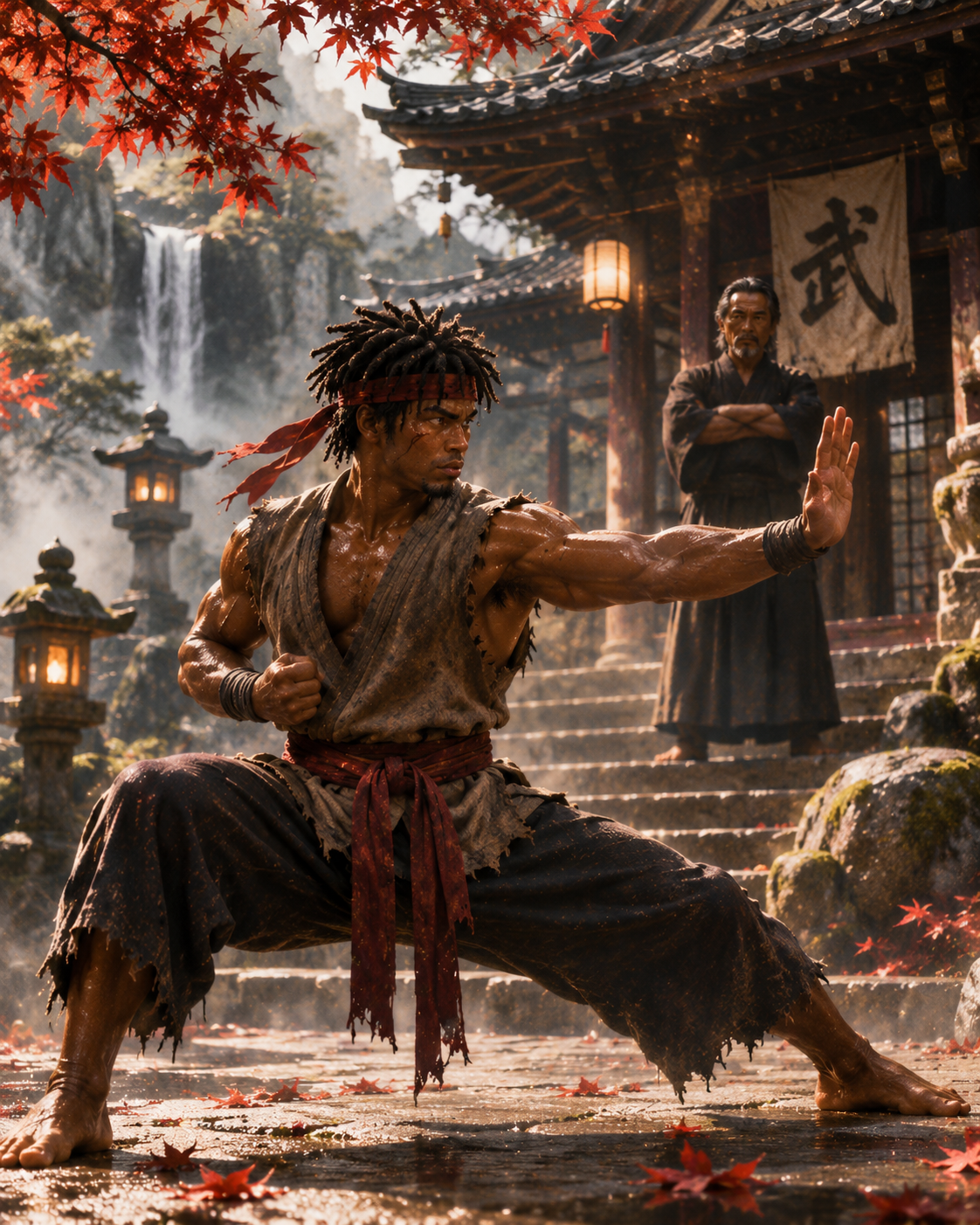
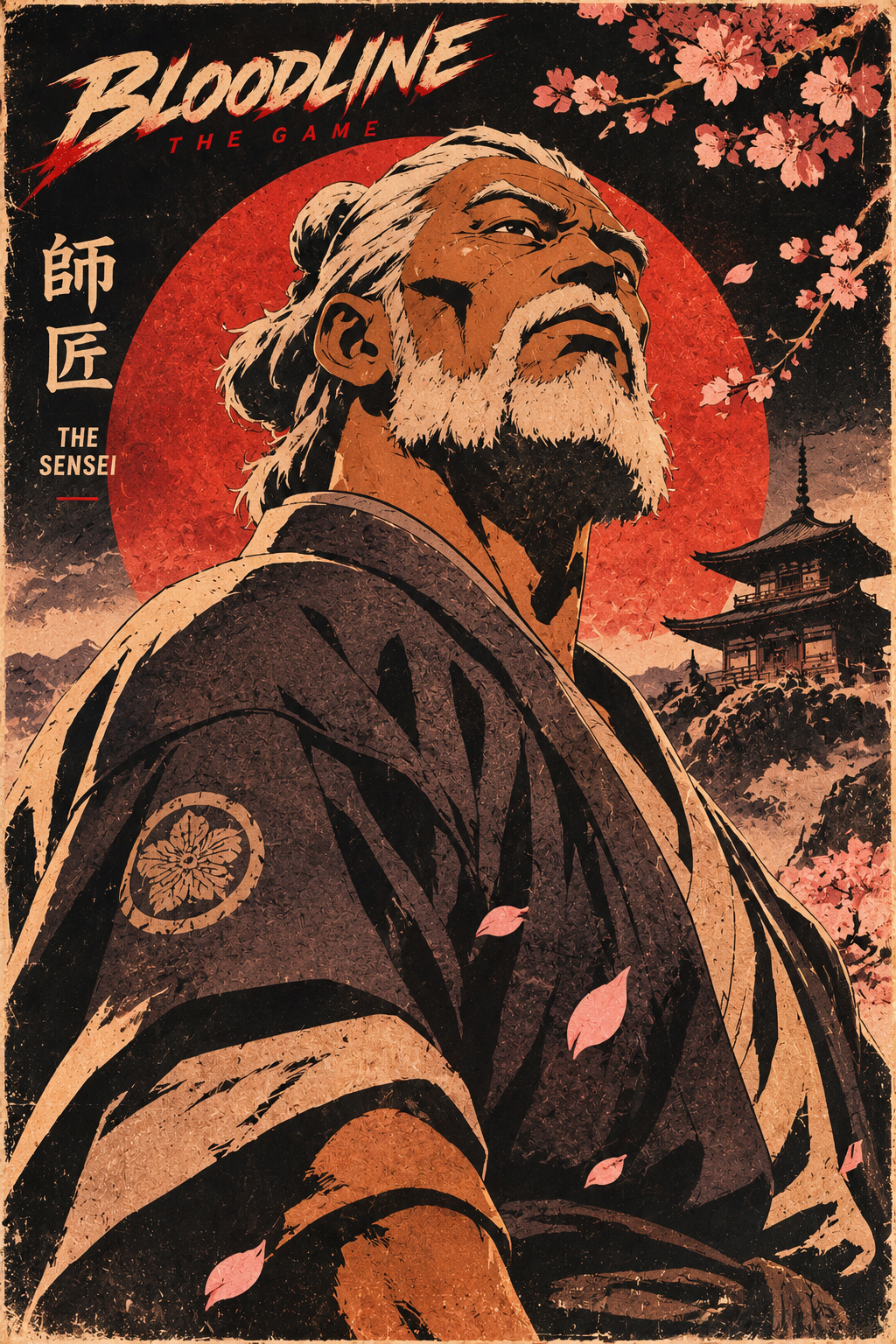
A Nigerian-American martial artist is raised and trained by a Japanese sensei. Their bond becomes that of father and son, without a biological connection. The ceremonial red belt and sword embody the responsibility of carrying those teachings forward.
06 / The journey
A world revealed
between the fights.
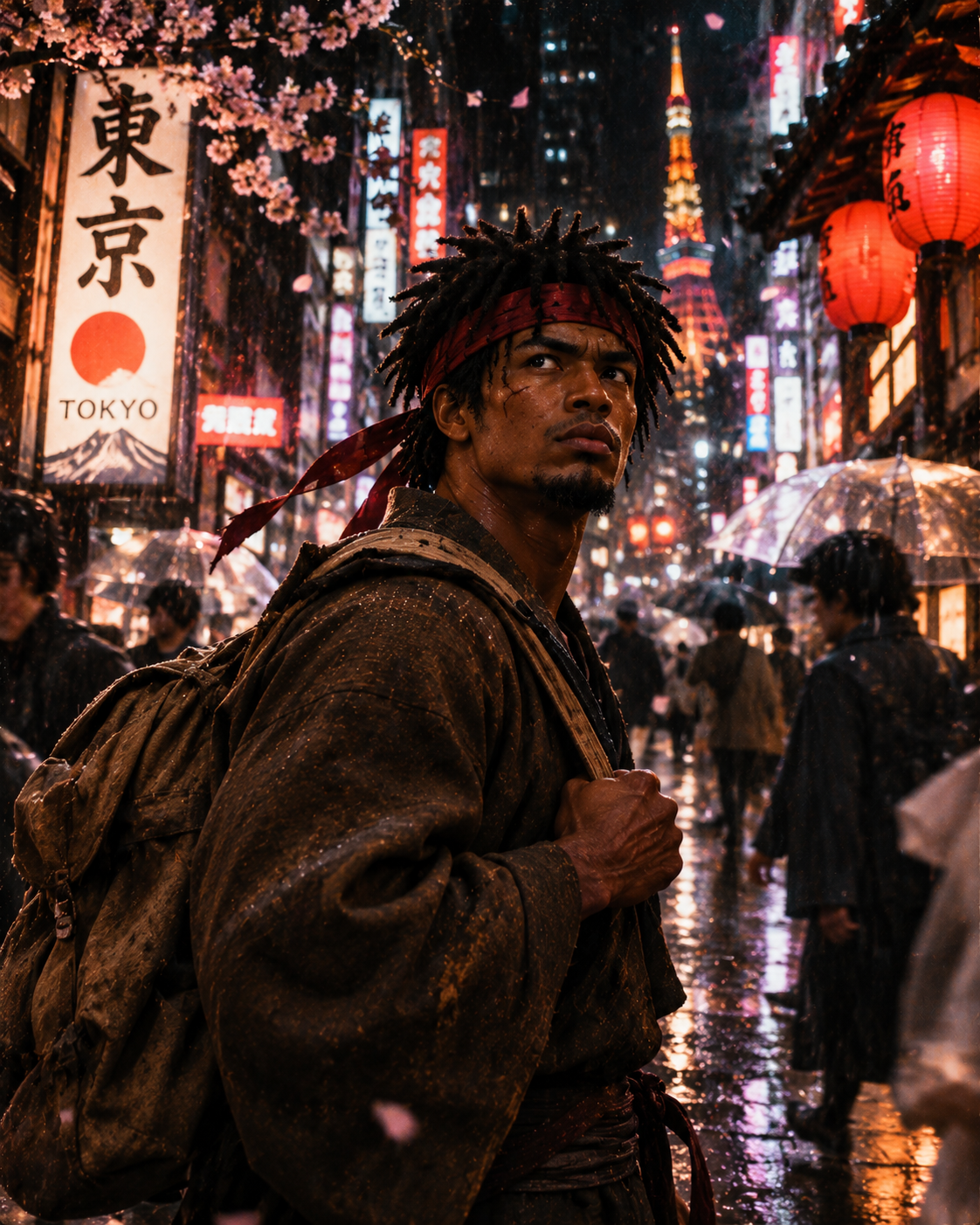
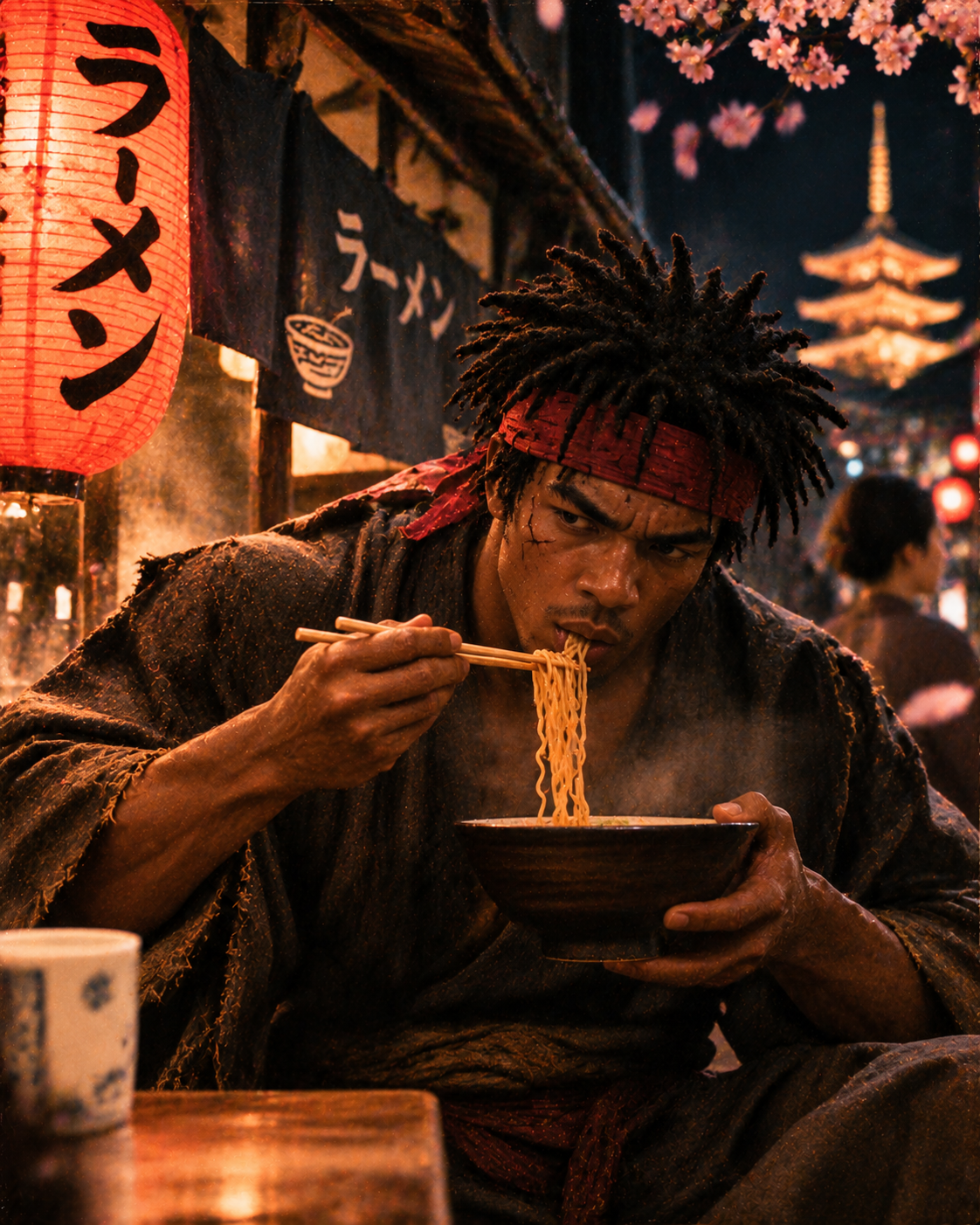
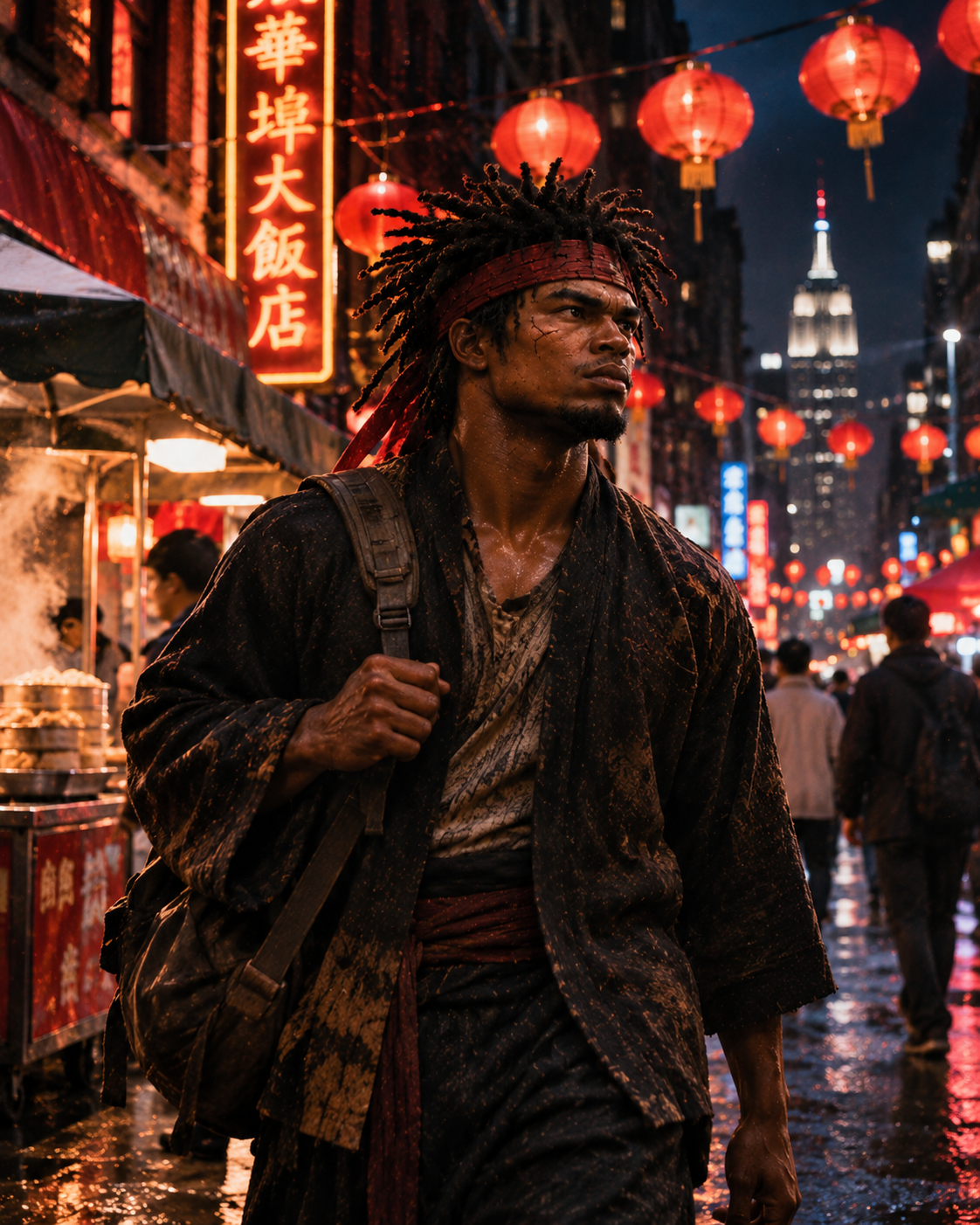
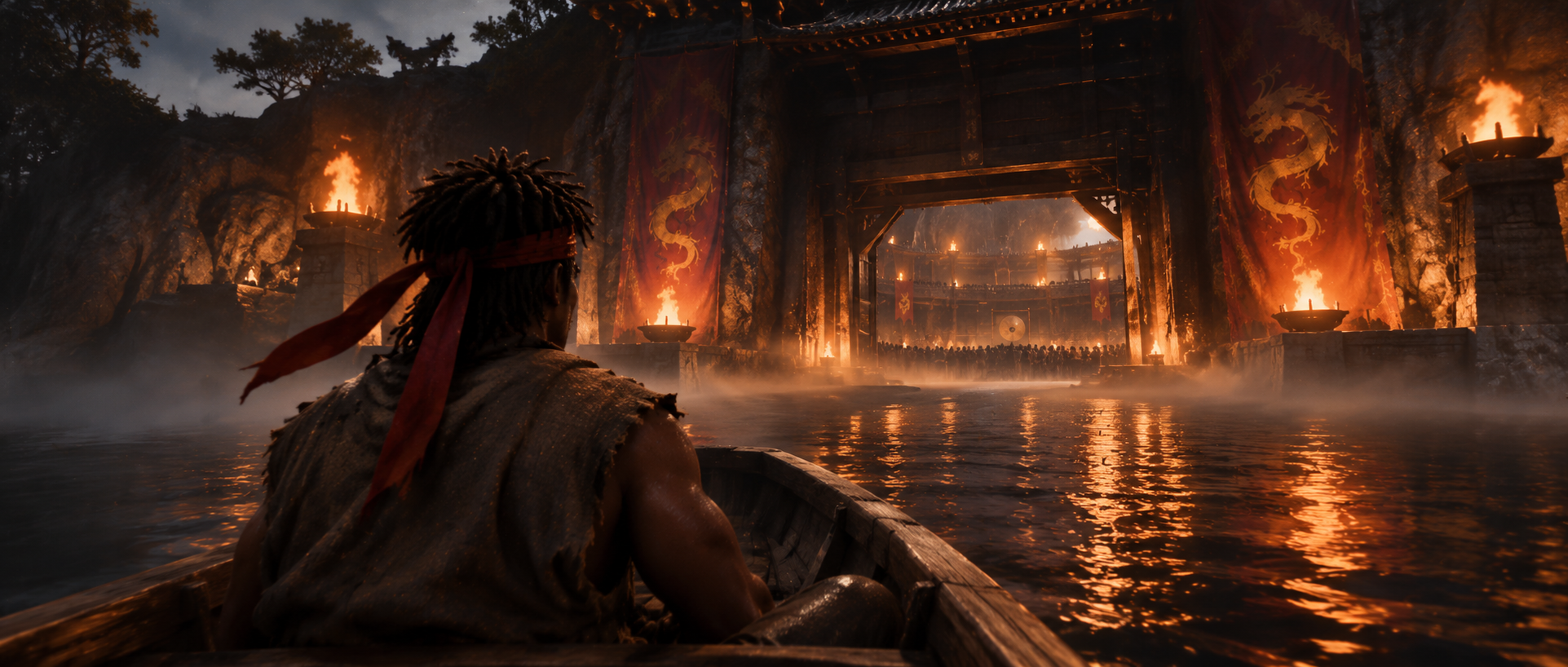
From the quiet rituals of the dojo to Tokyo’s streets and the waterways of China, BLOODLINE unfolds through cinematic environments. Each setting reveals another dimension of the protagonist before the tournament.

07 / Character roster
Nine roles.
Contrasting traditions.
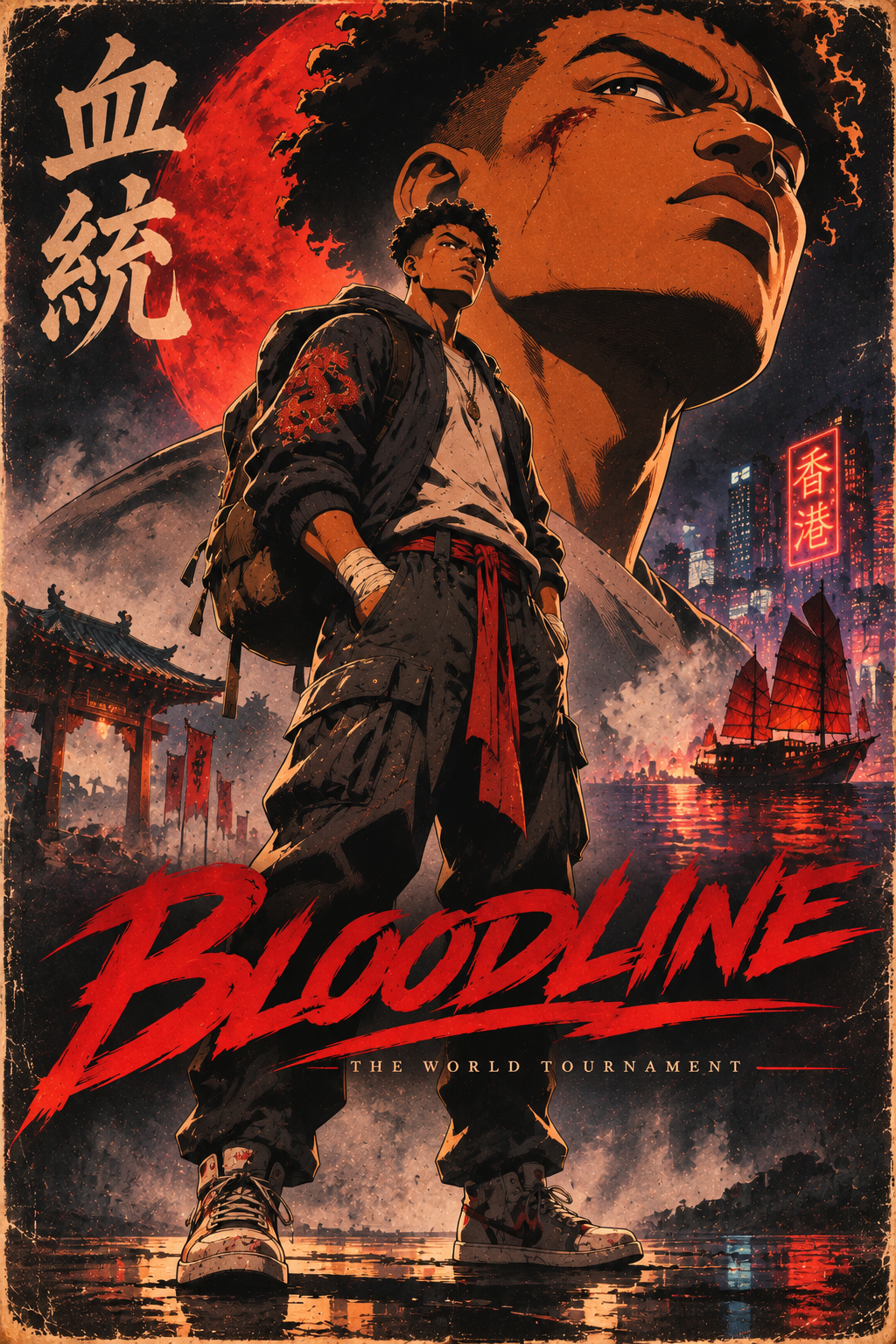
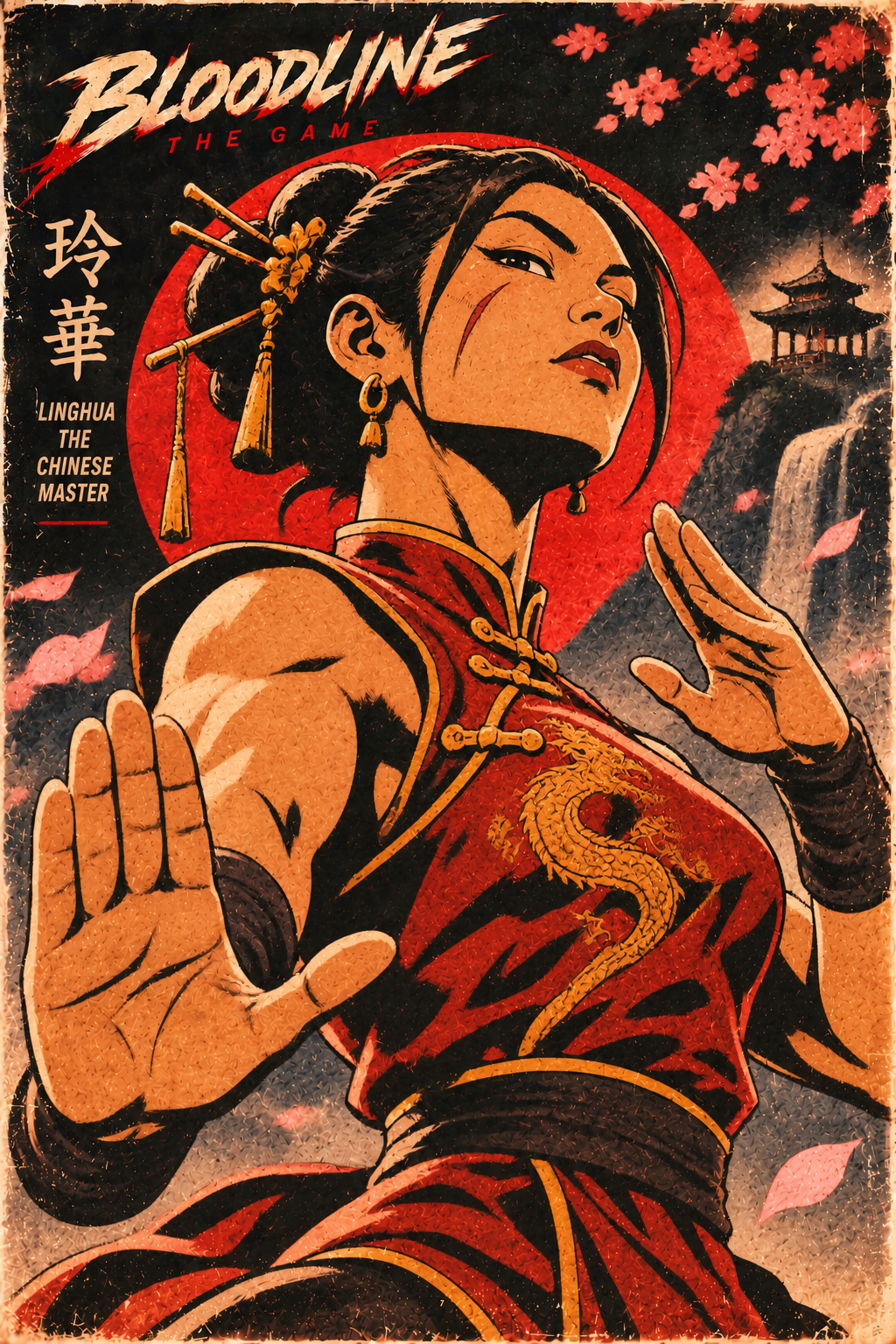
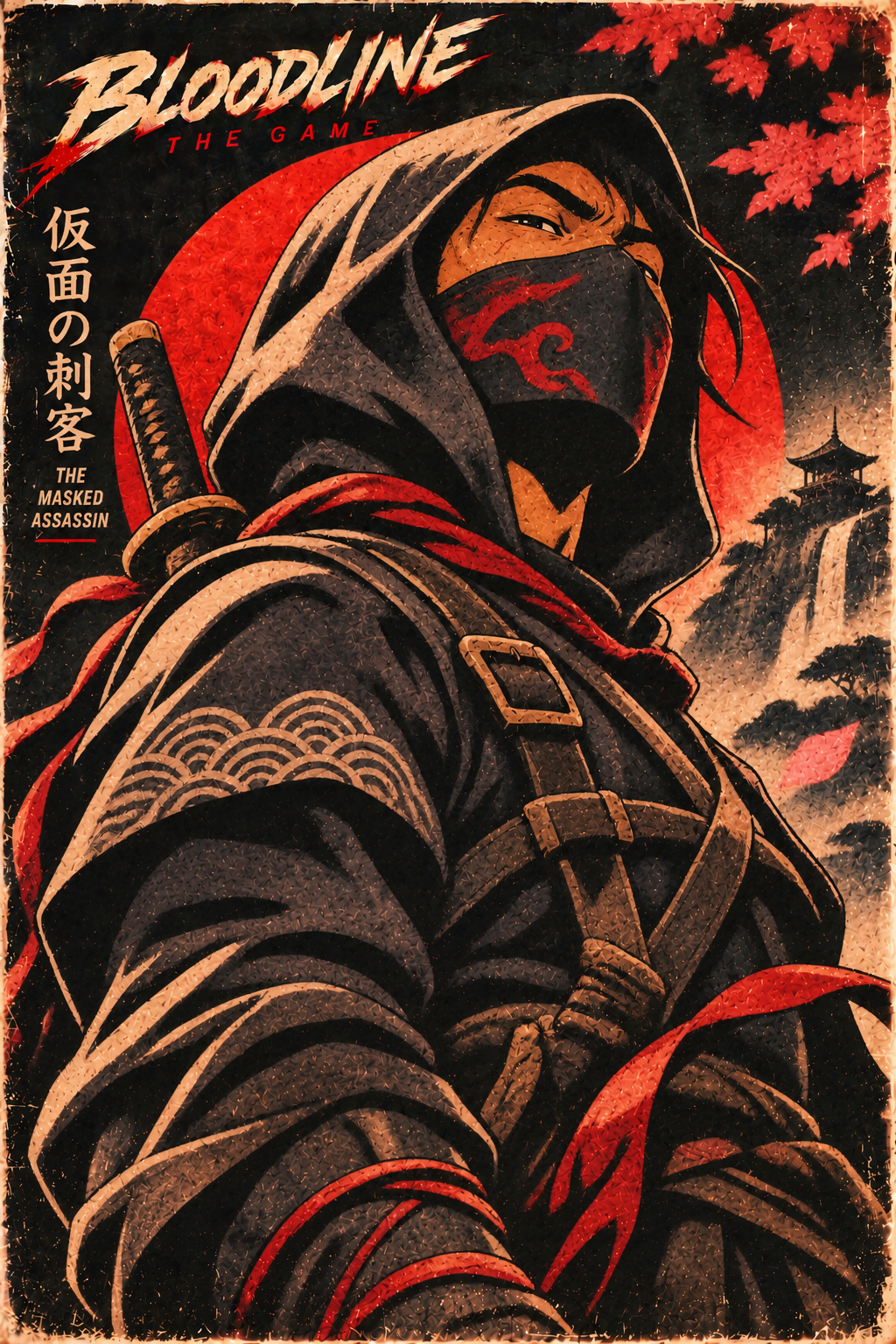
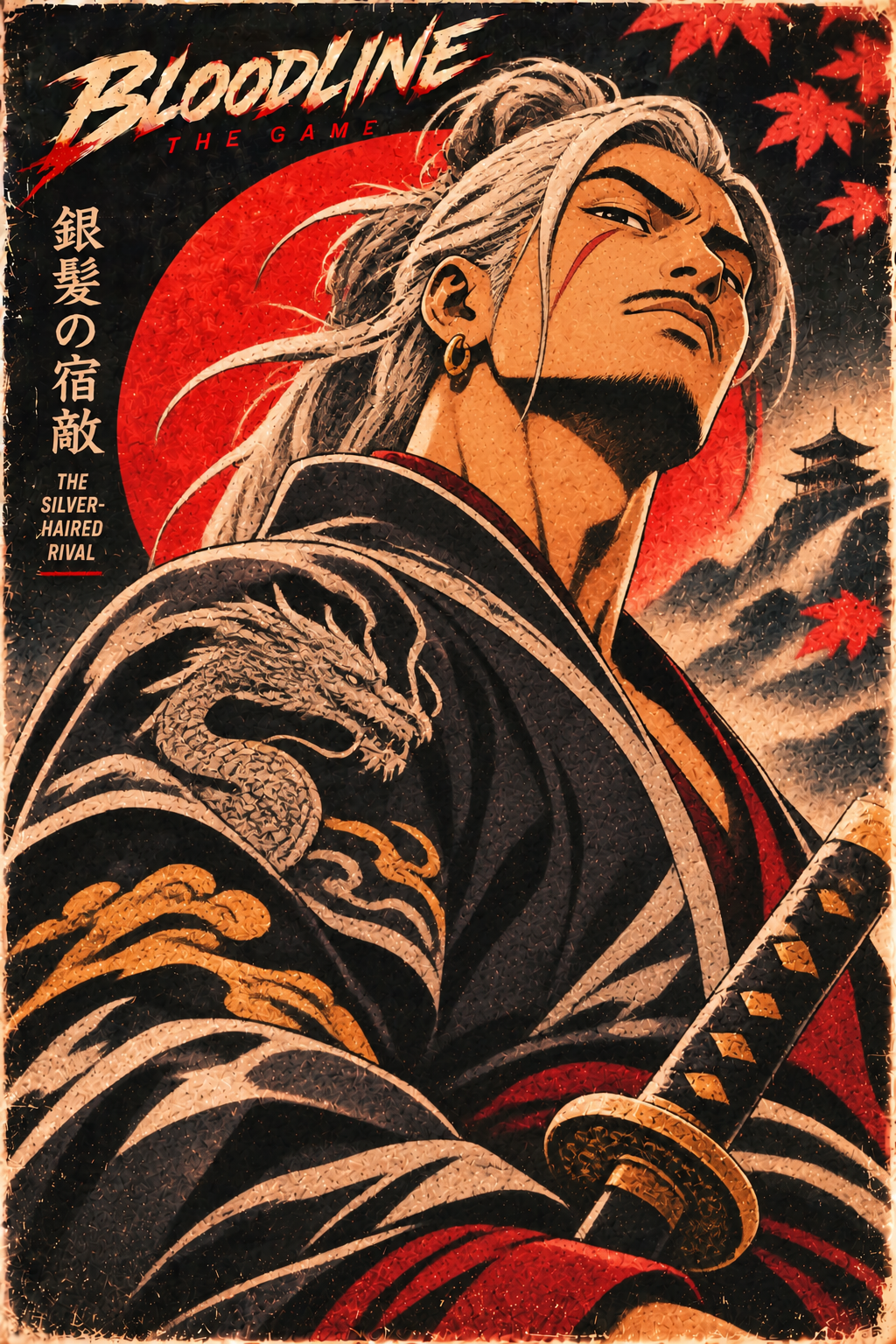
Nine individual character studies establish distinctive silhouettes, fighting traditions and personalities within one entertainment universe. The Japanese sumo champion is the original final opponent; the silver-haired fighter is a rival.
08 / Arenas and environments
The architecture
of anticipation.
Temple courtyards, city streets and a torchlit underground arena establish scale and emotional stakes before the first strike.
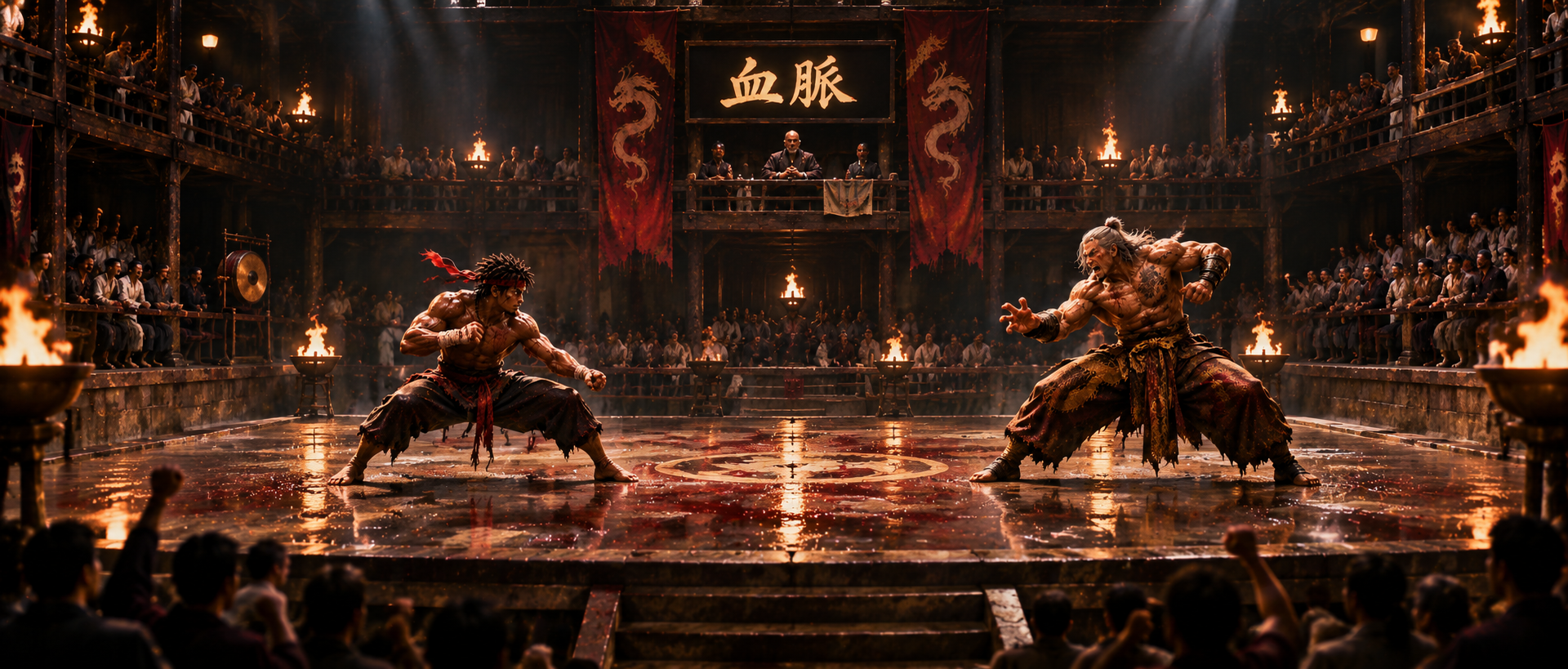
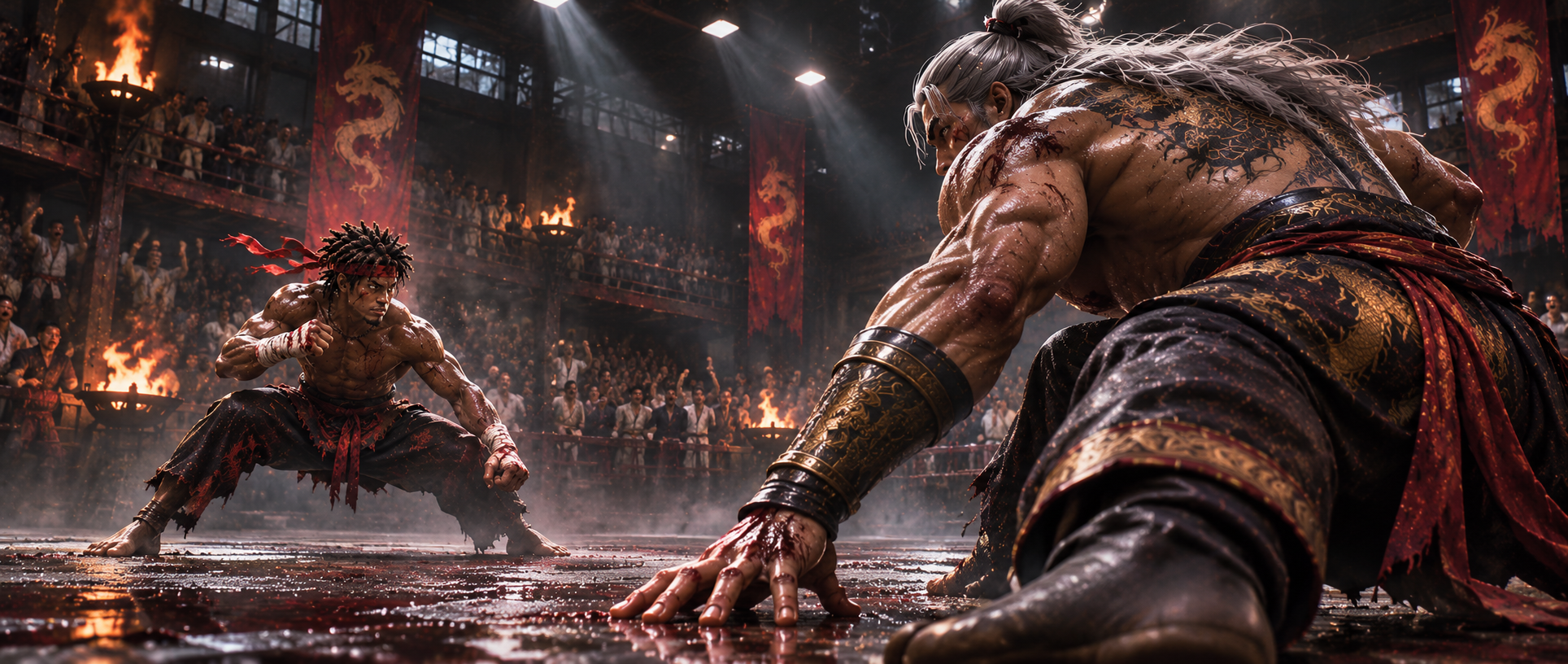
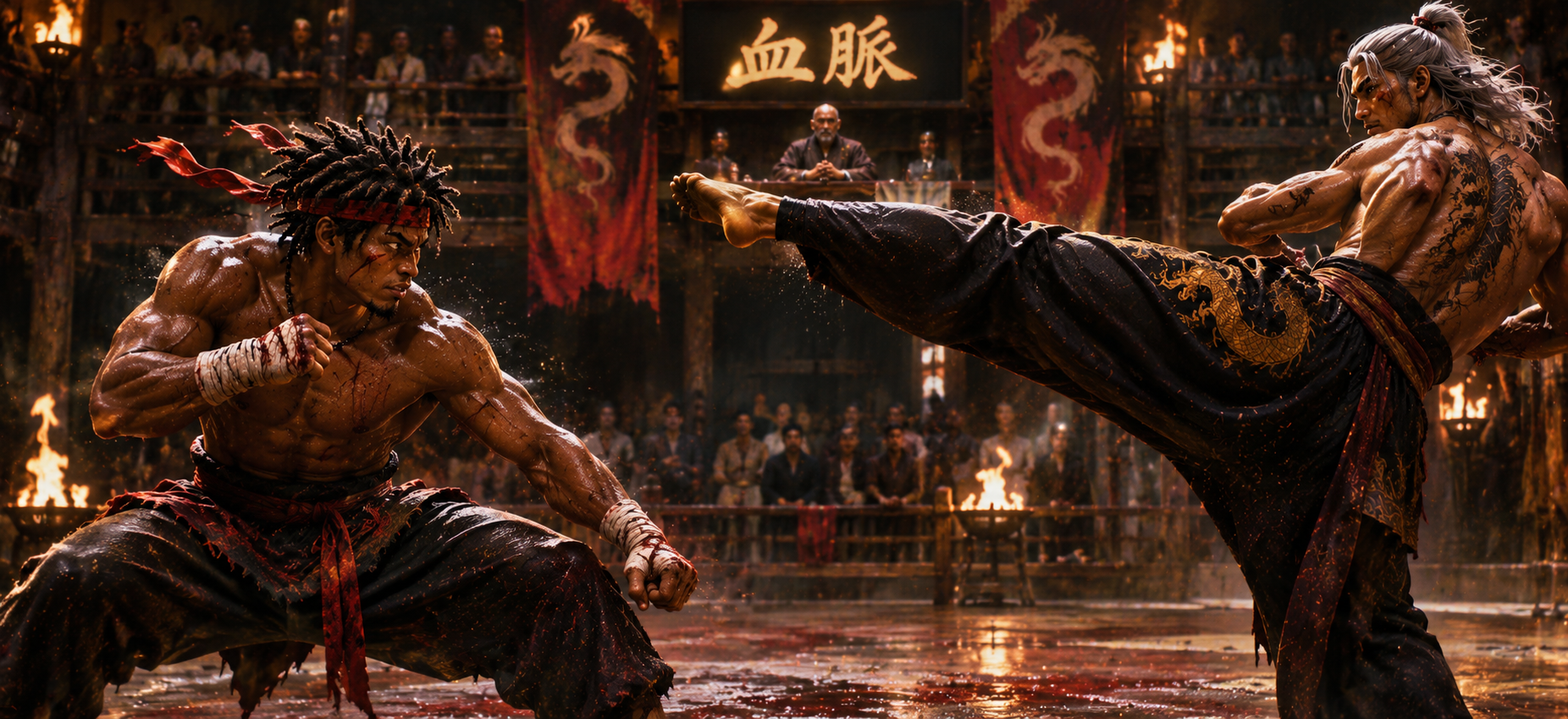
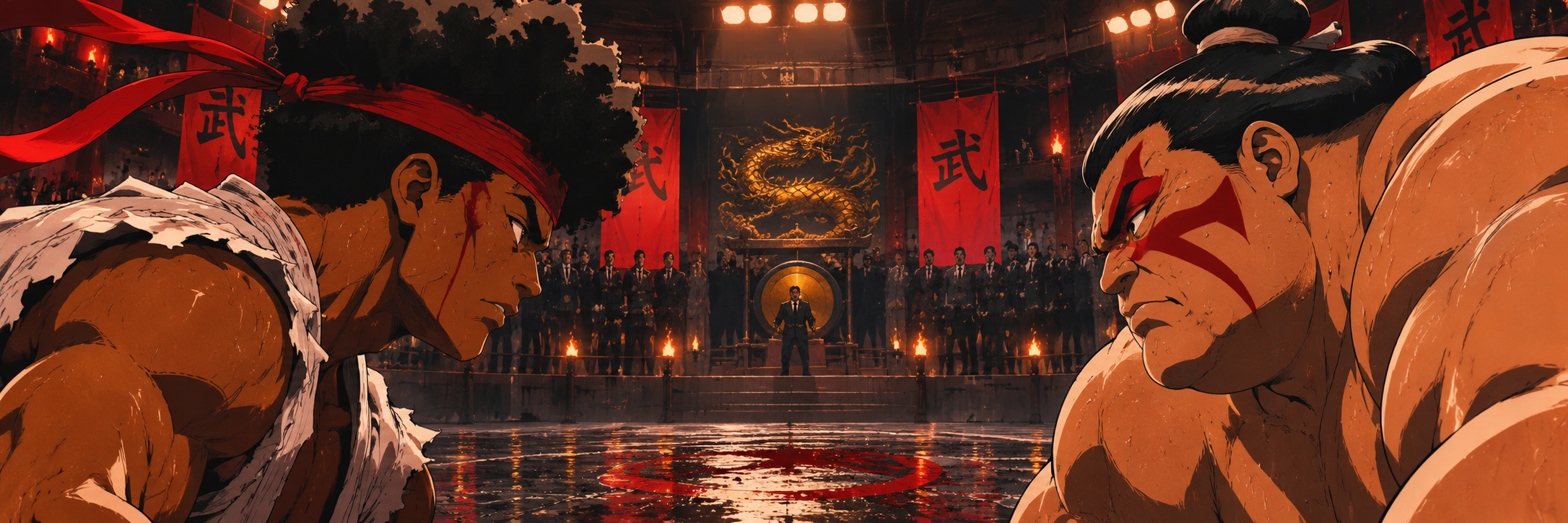
Narrative cinematic artwork. Silver-haired encounters depict the rival, not the final boss.
09 / Gameplay and combat
Readable impact.
Cinematic intensity.
Contrasting opponents, attacks and arenas explore the rhythm of a fight. Wide frames give the action room; a consistent interface keeps health, energy and timing readable.
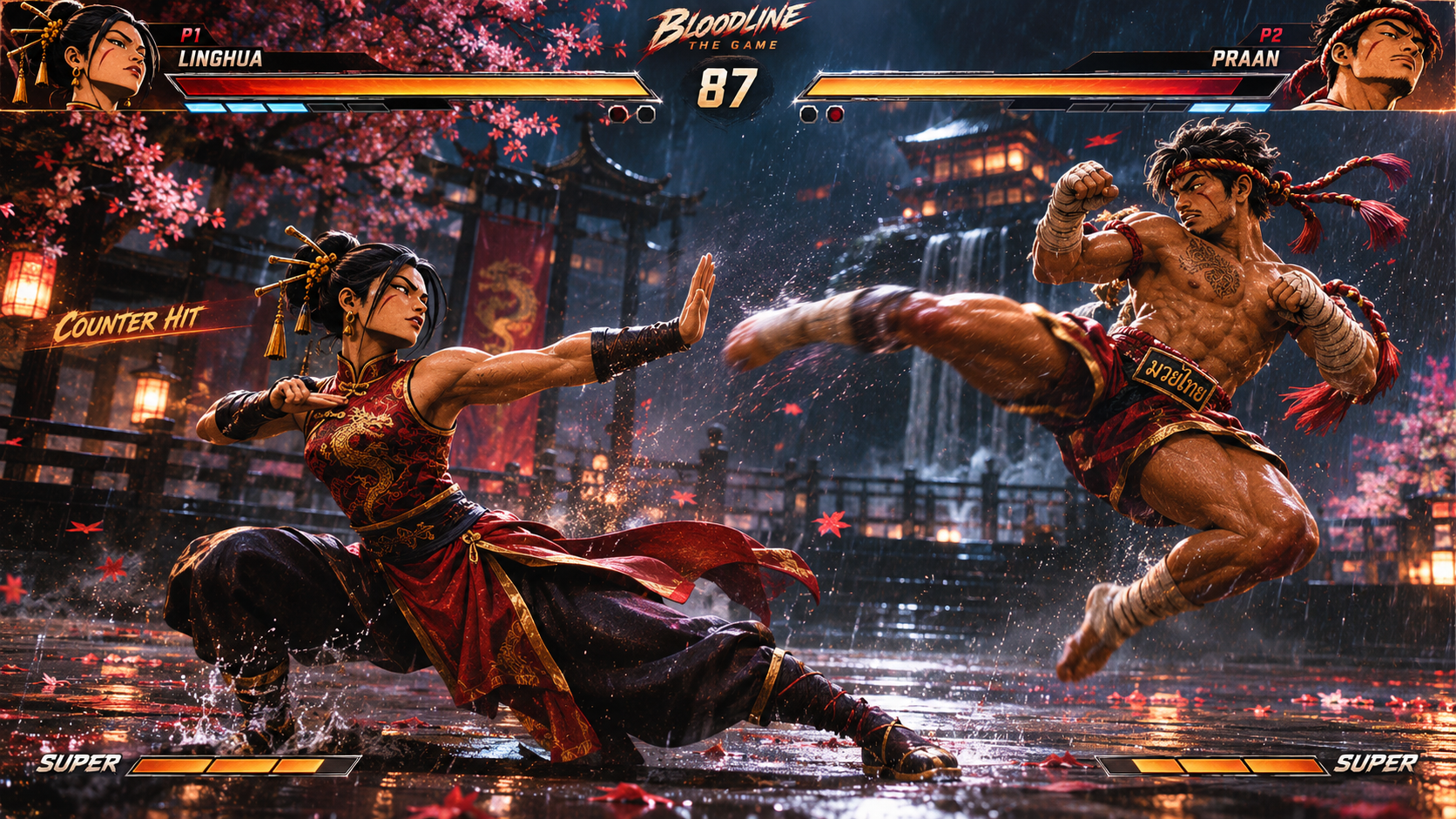
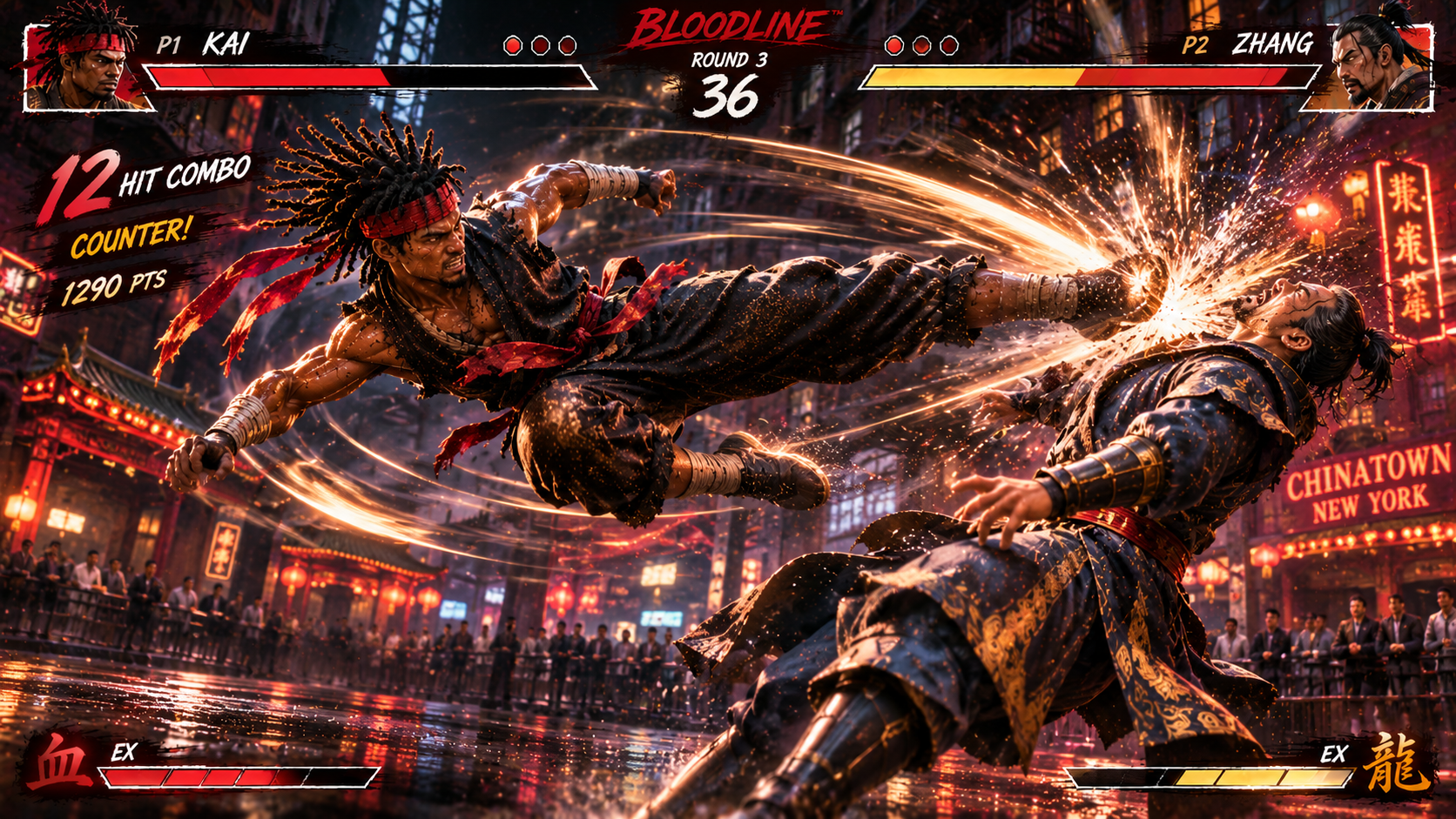
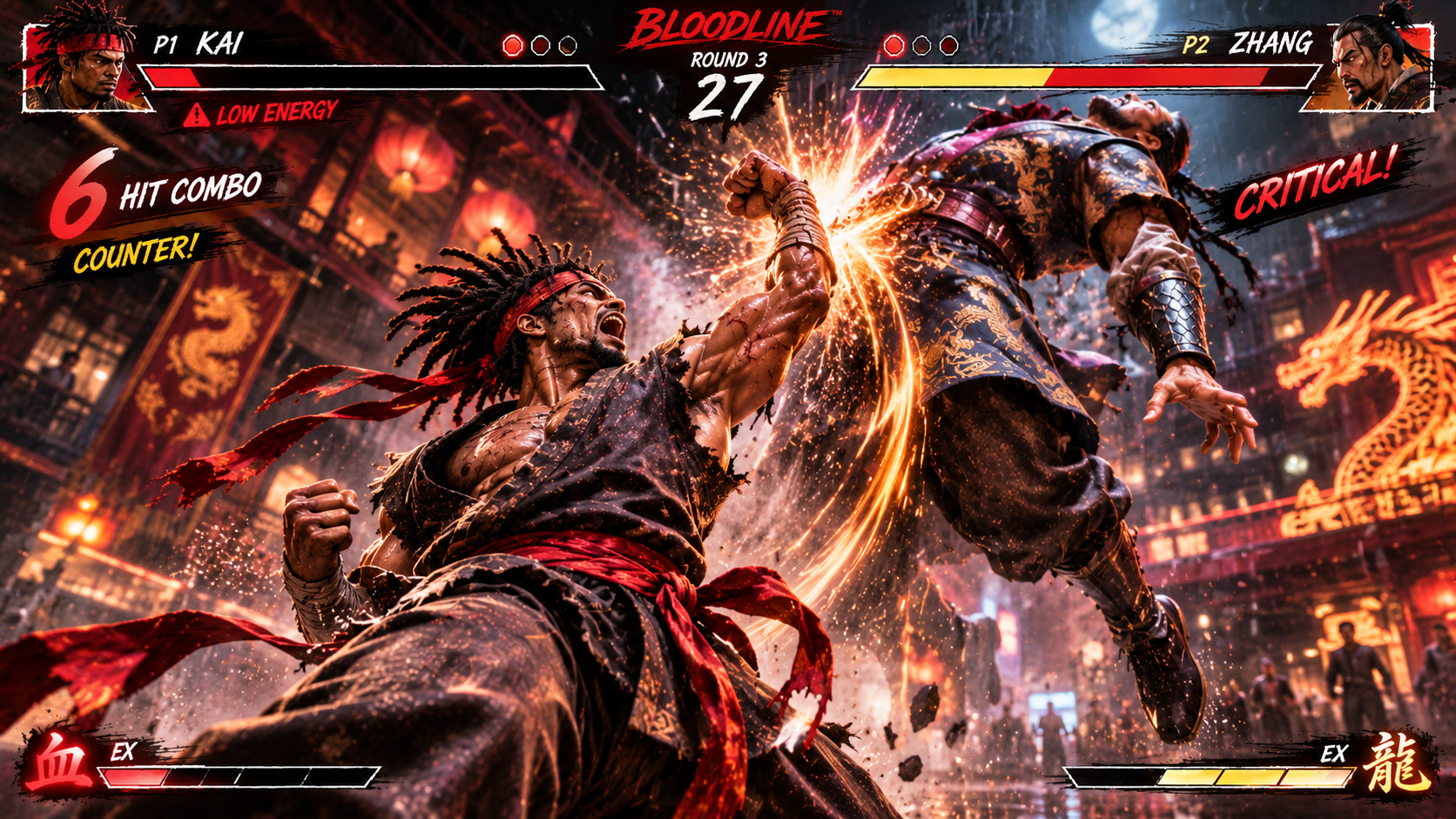
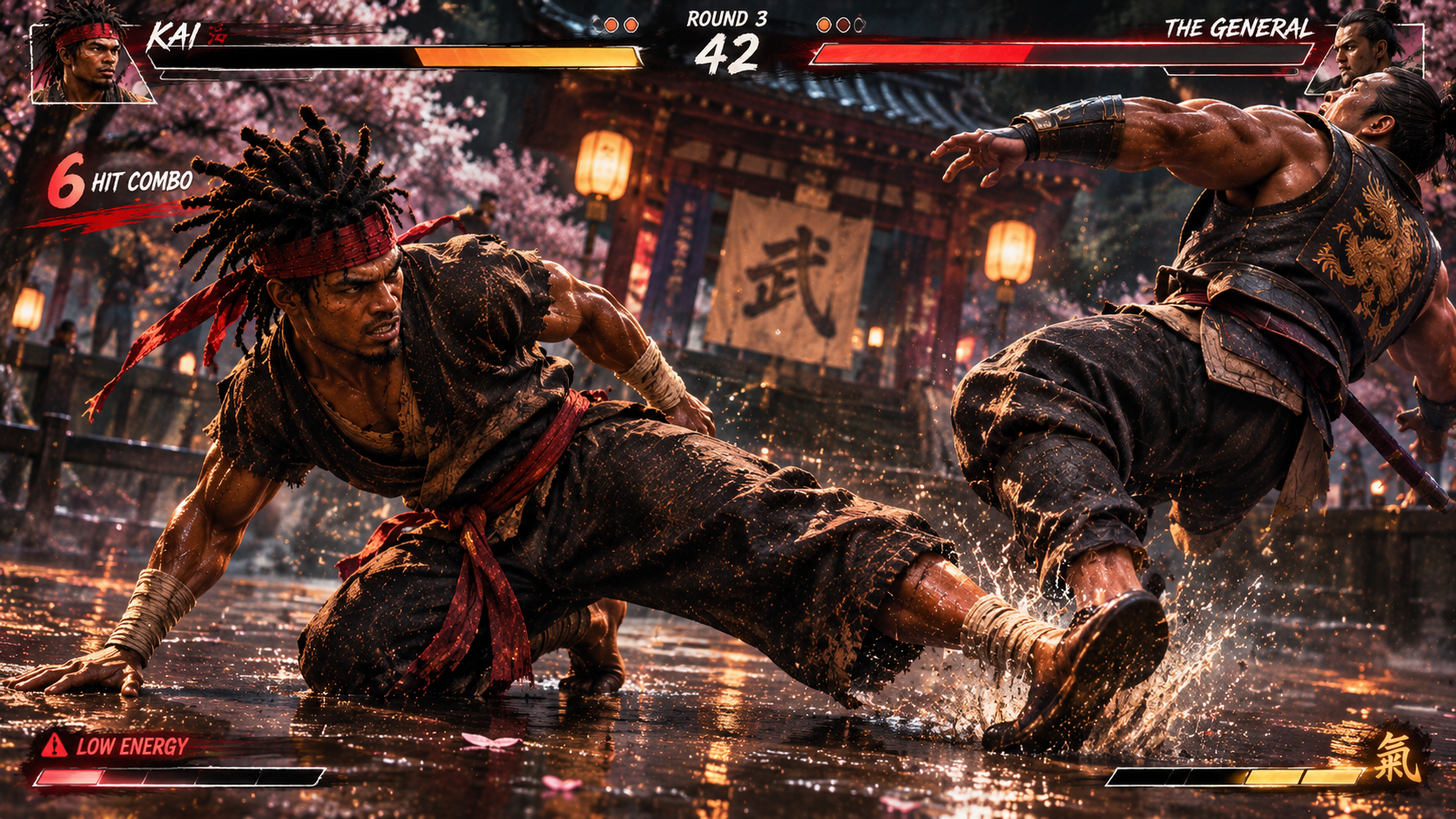
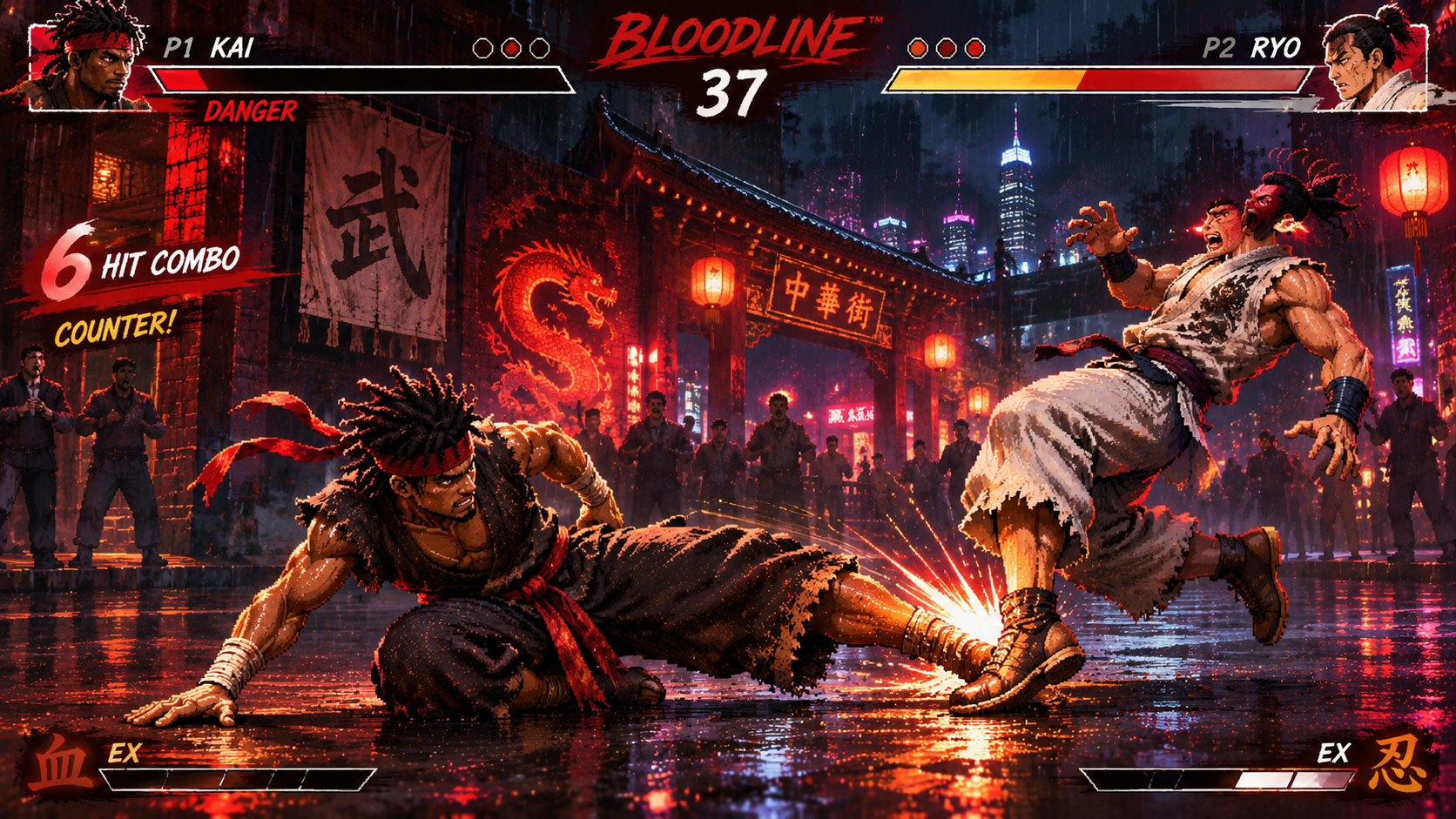
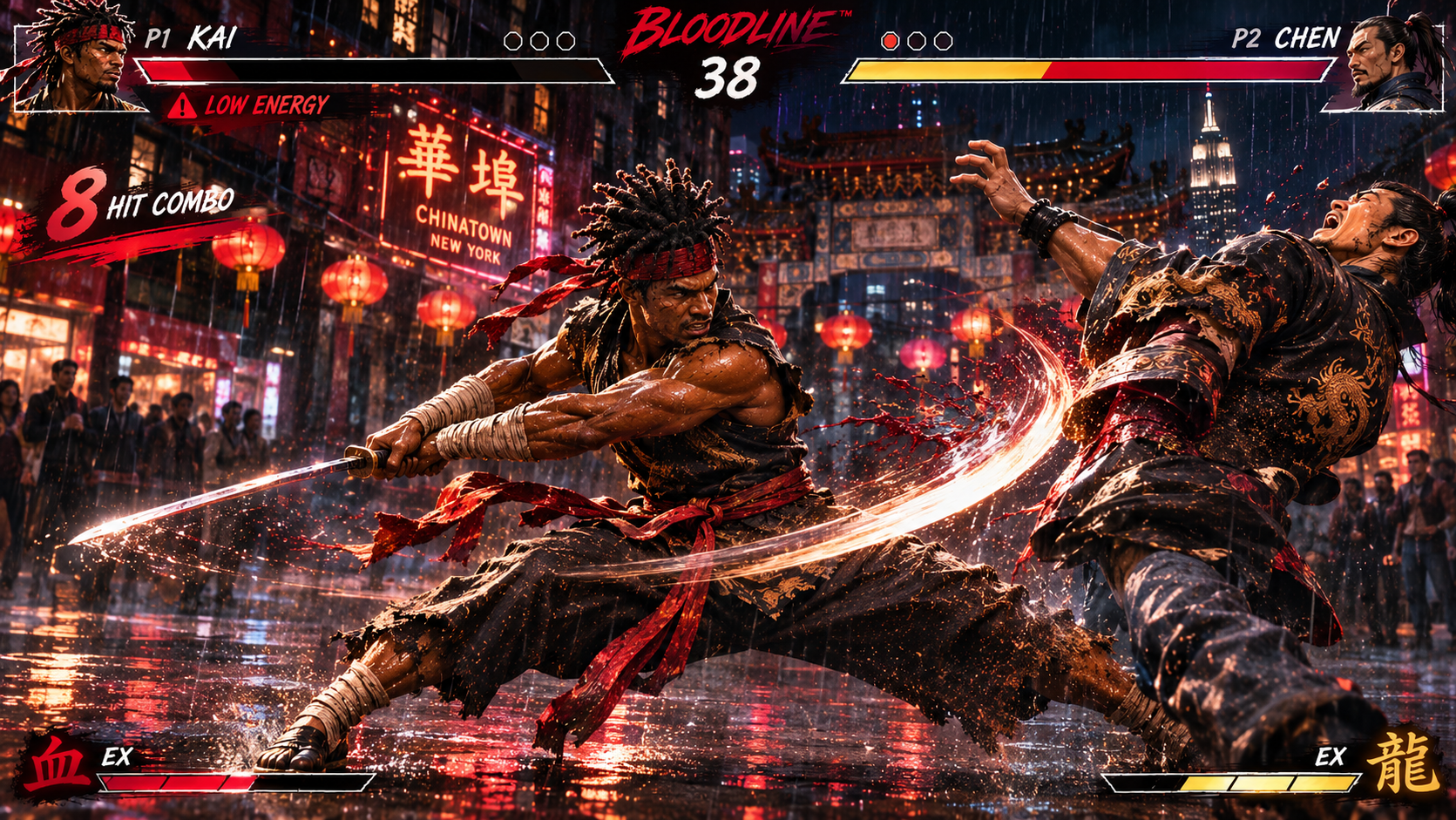
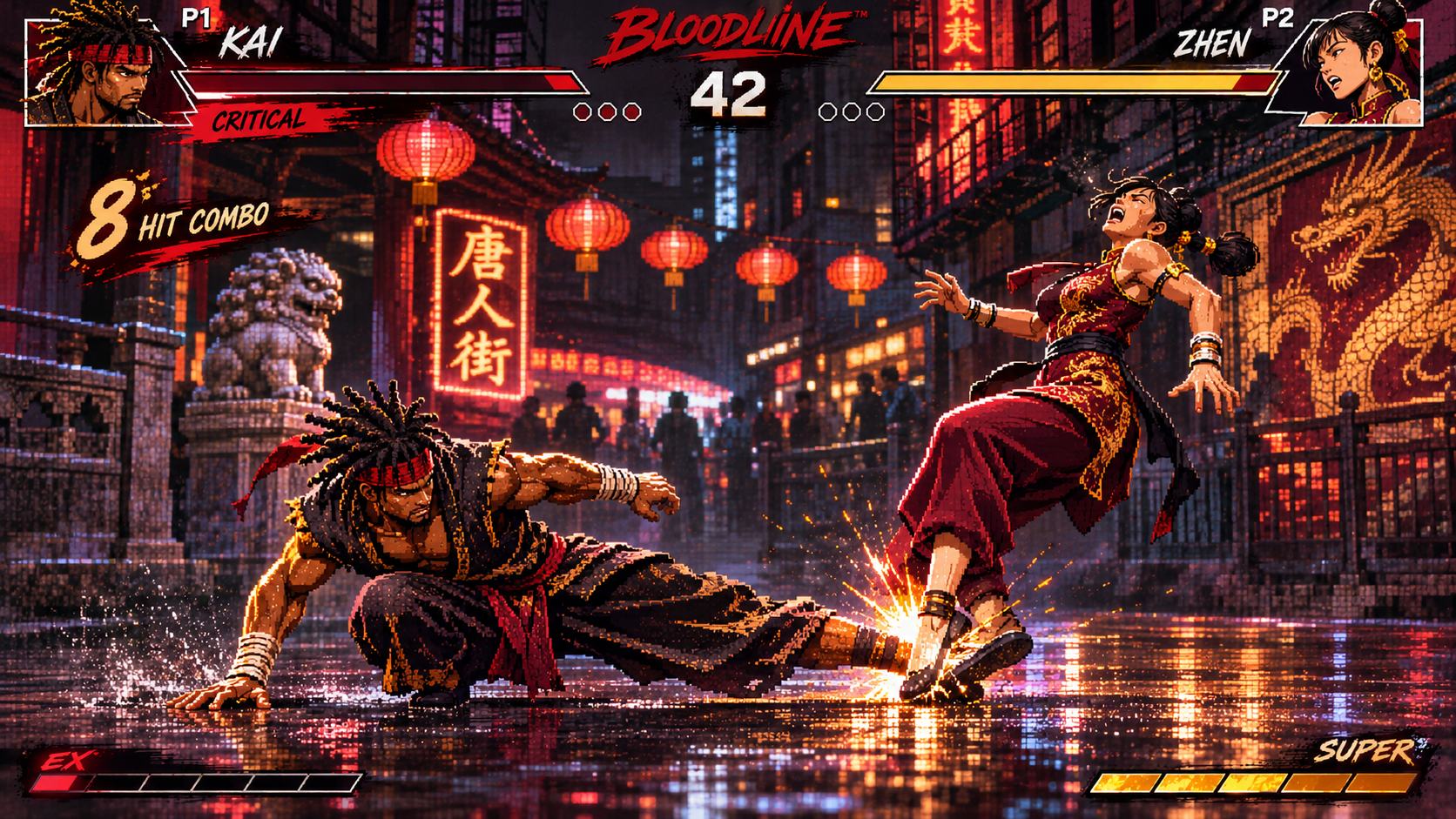
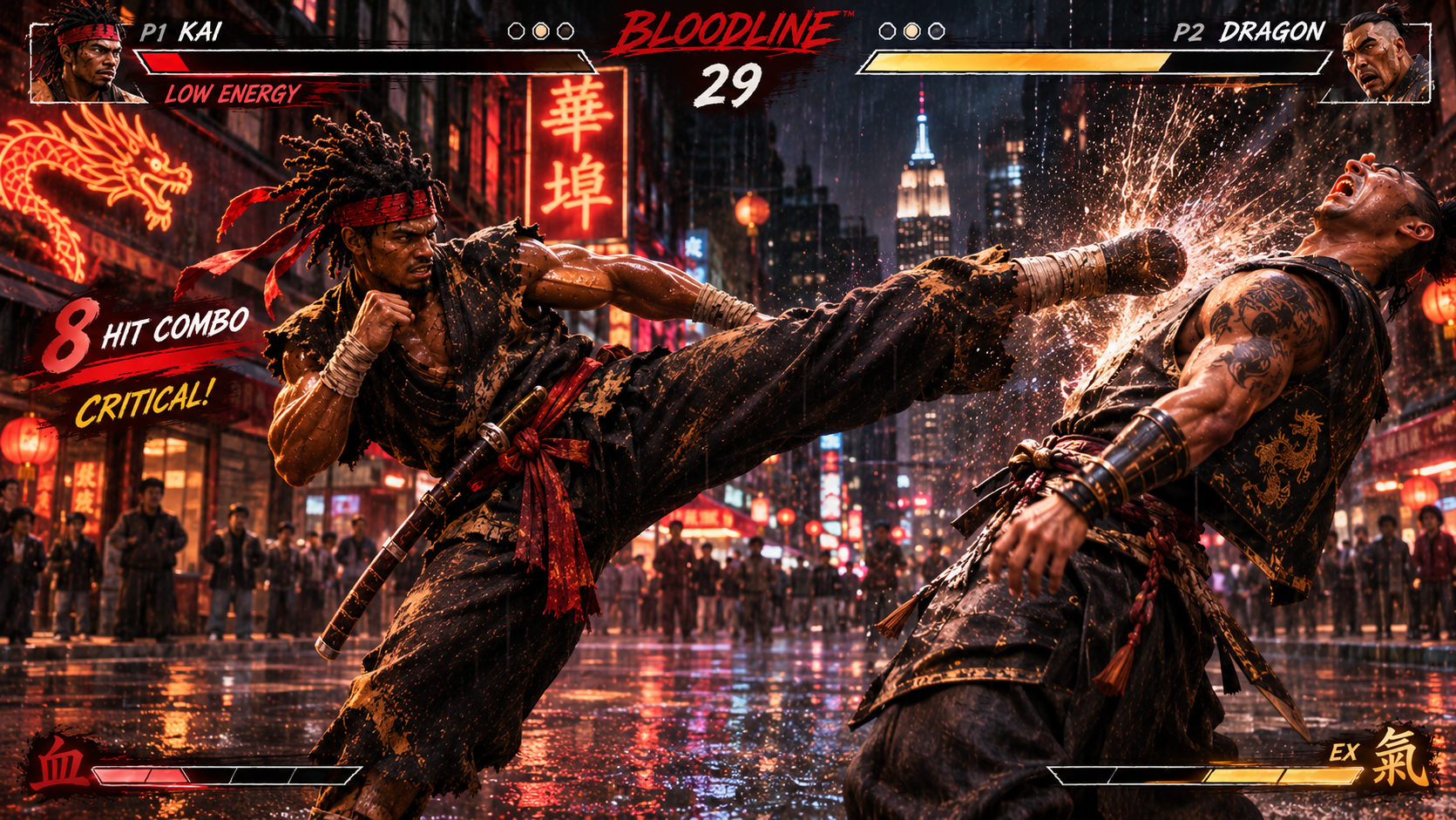
Static gameplay and HUD concepts, not screenshots from a developed game. Working fighter labels and statistics are provisional.
10 / Game interface design
From first choice
to final round.
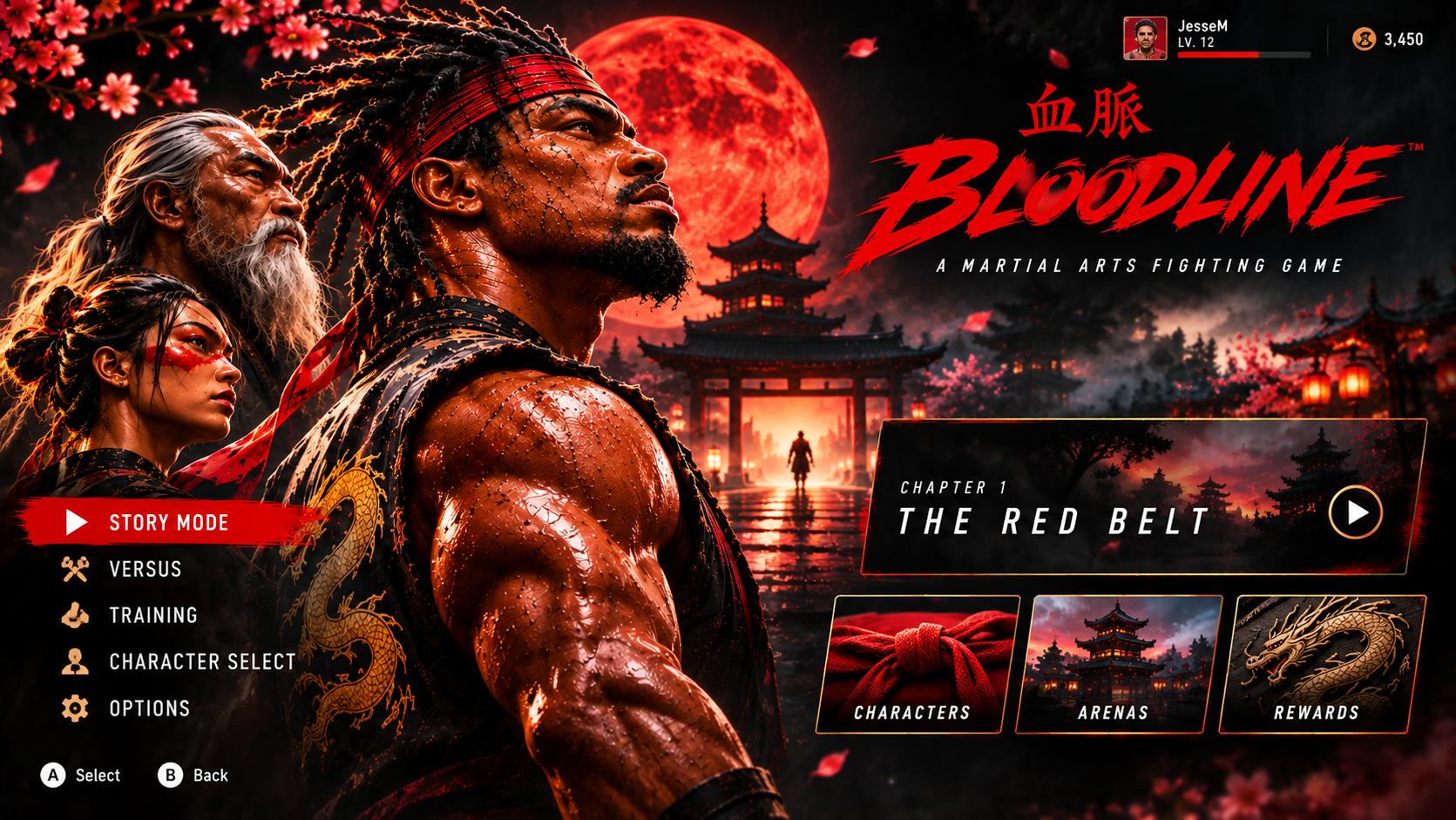
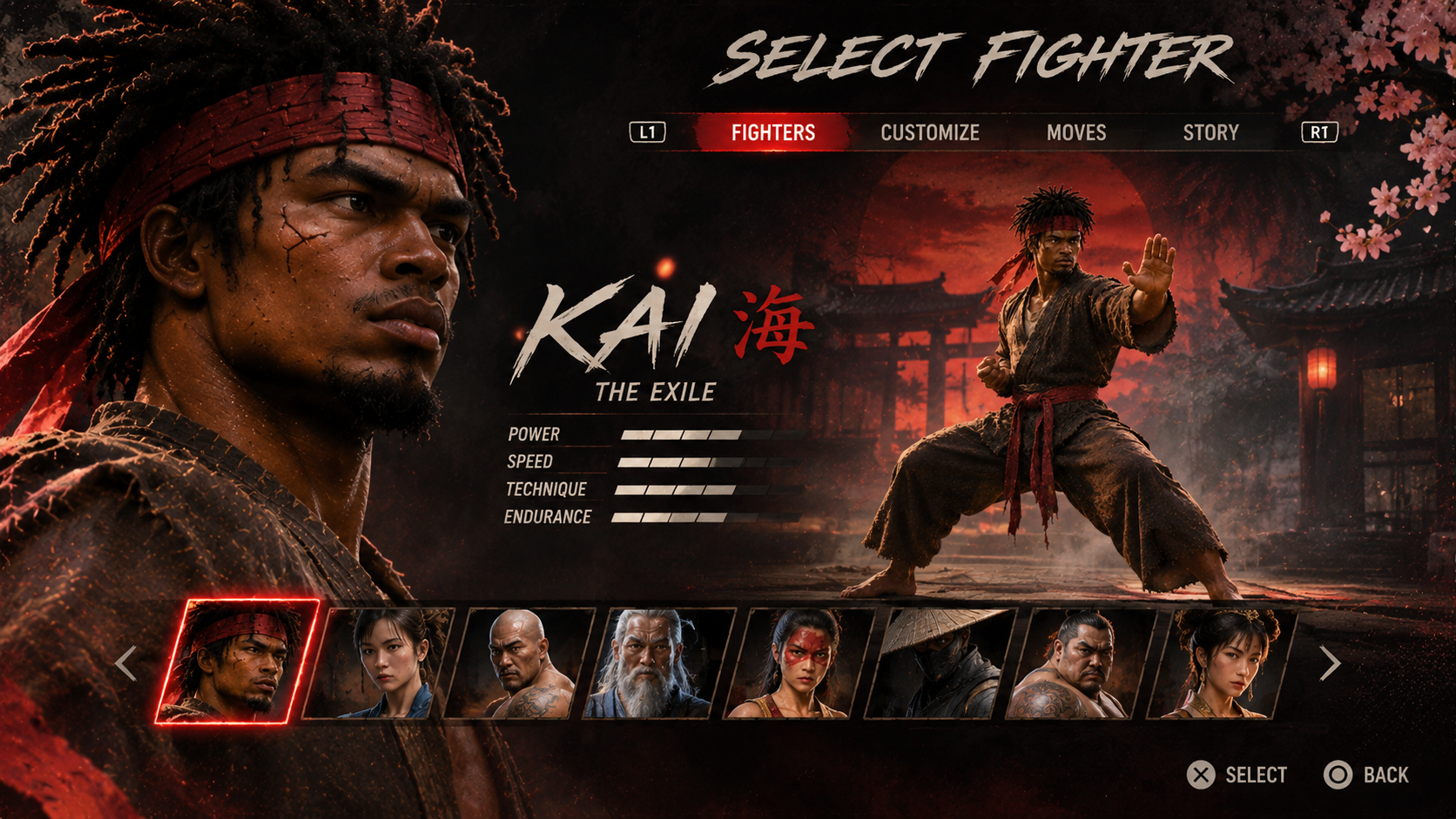
A connected interface language carries the player from the main menu into fighter and arena selection, through tournament progression and the outcome of a match.
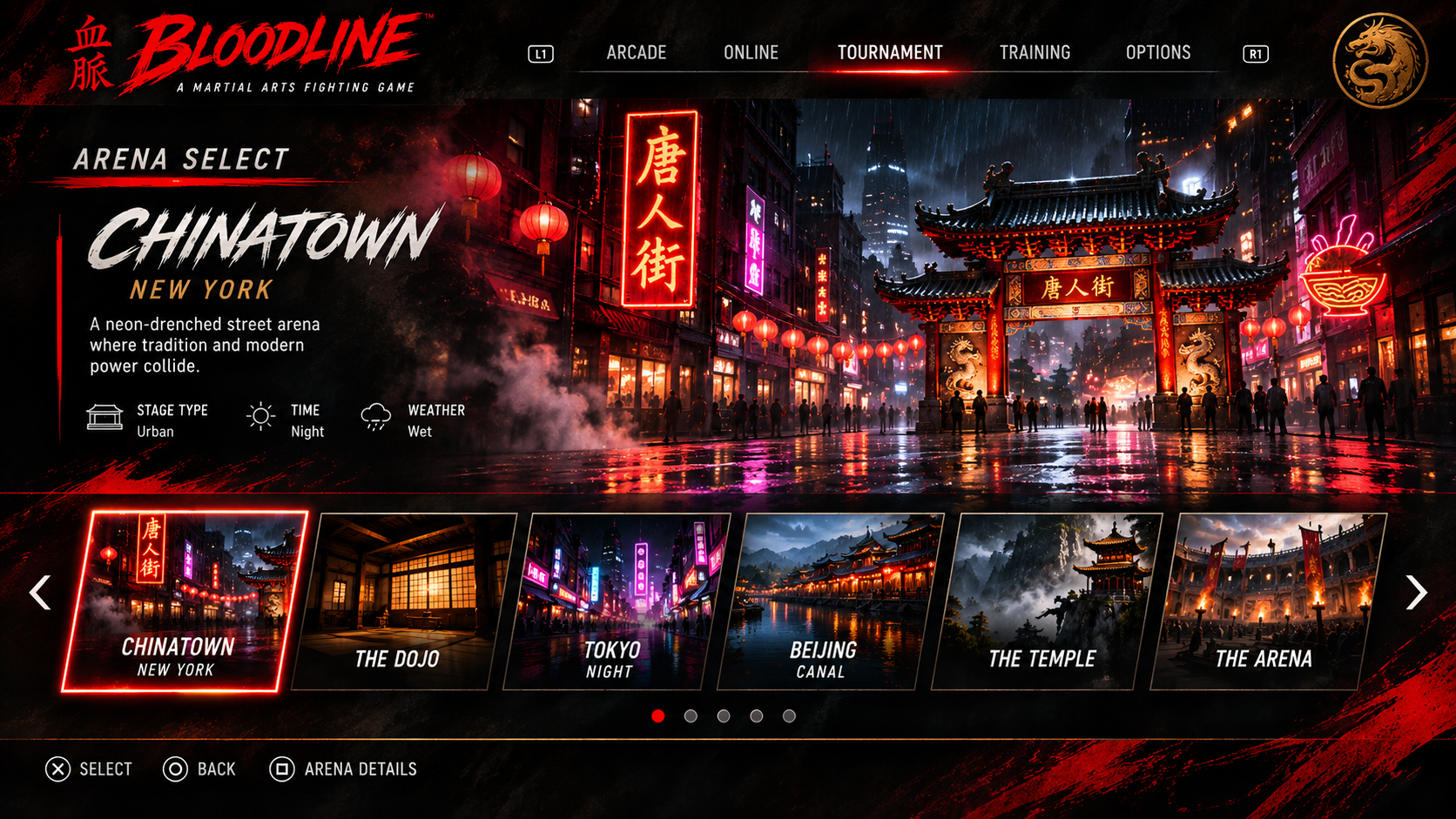
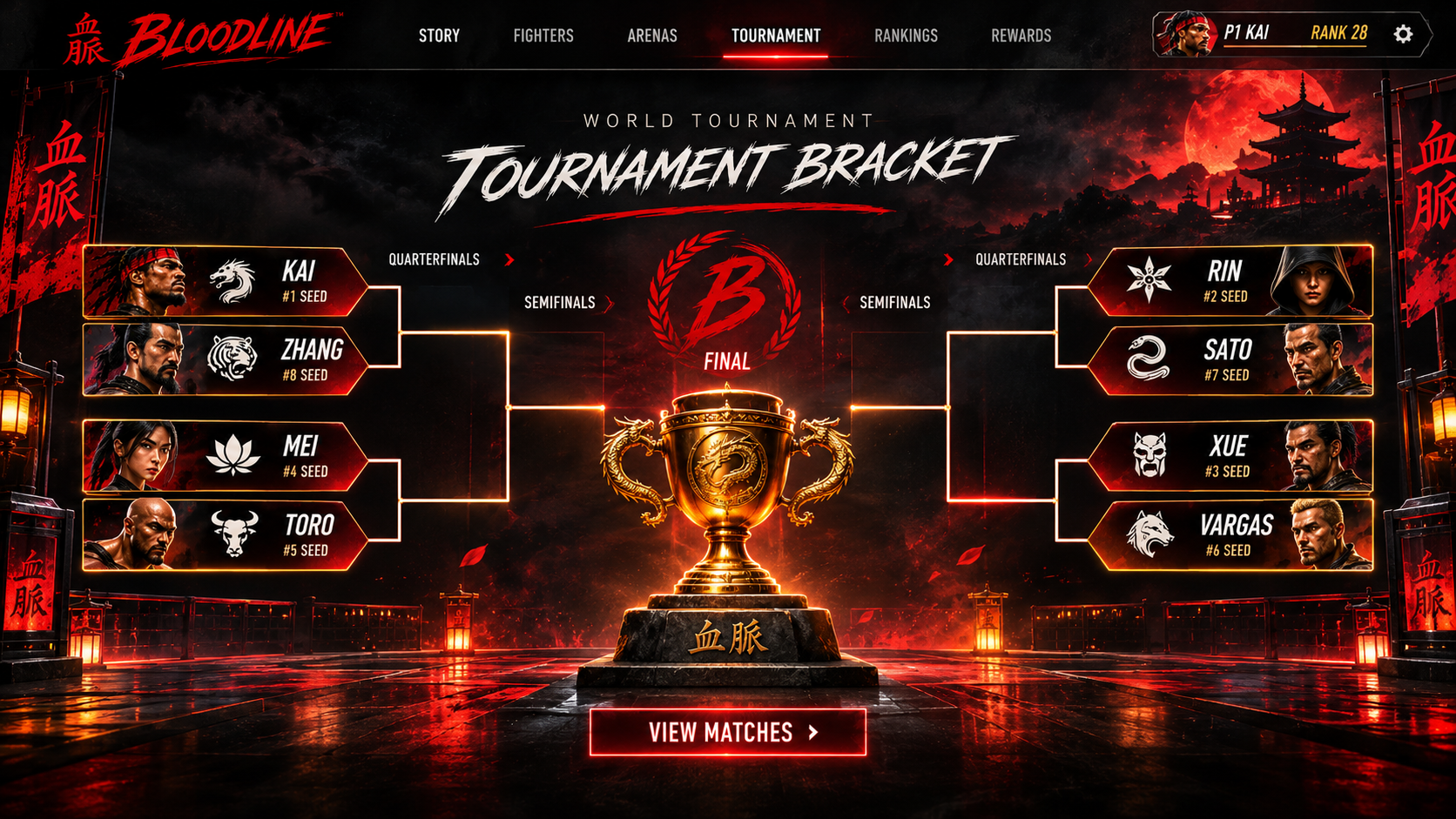
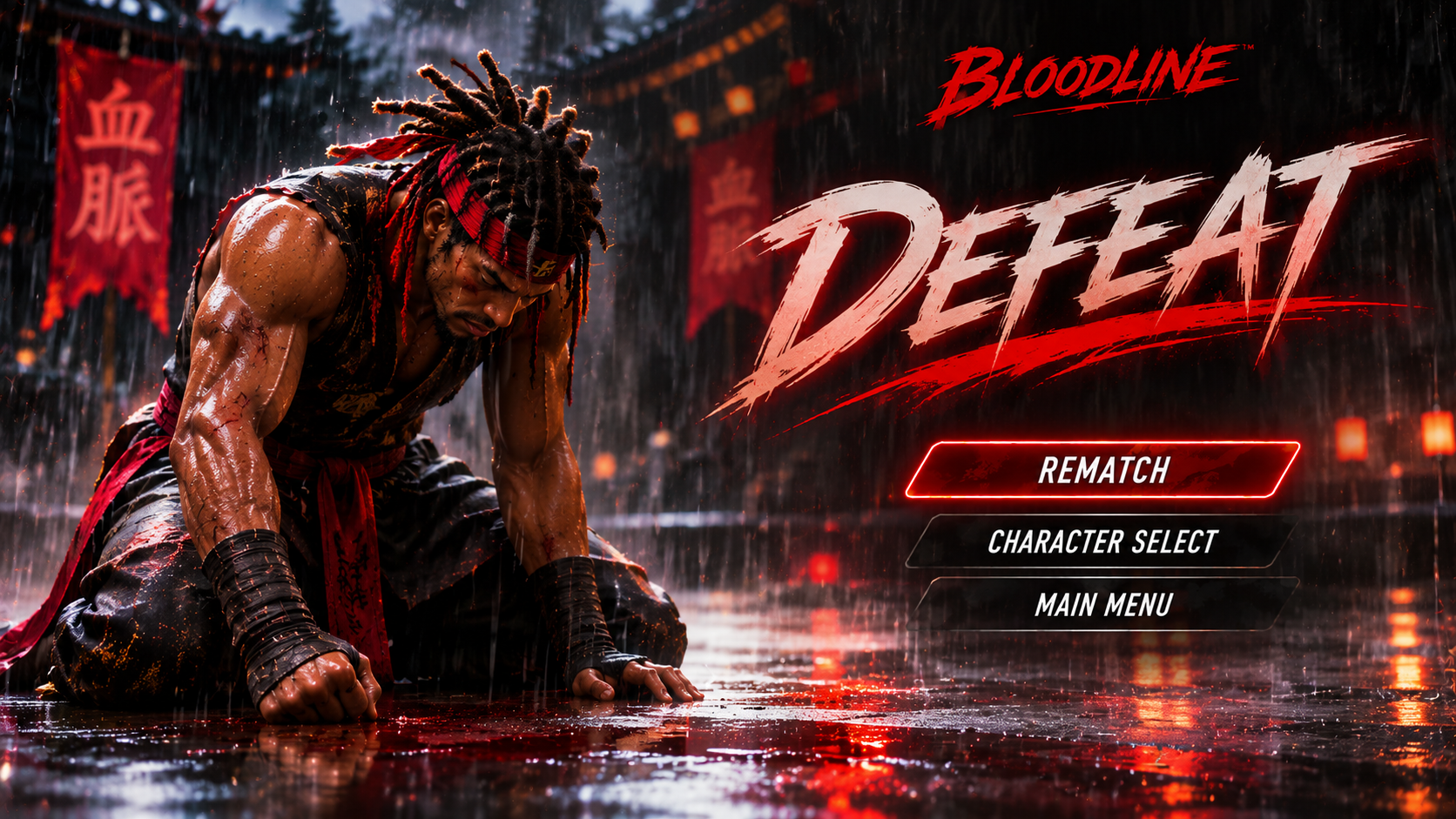
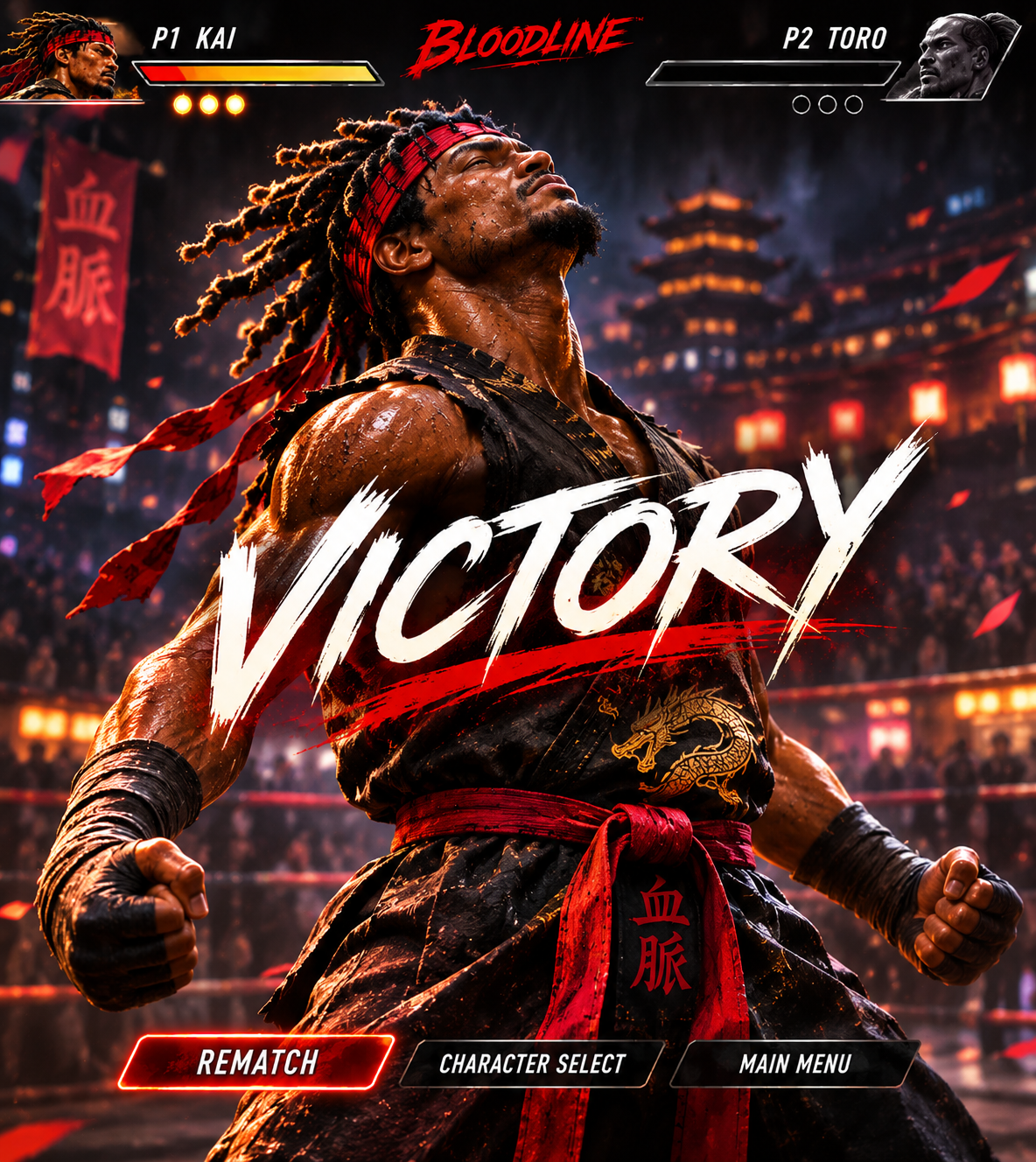
After the impact.
Outcome screens turn a competitive result into a character moment. Victory and defeat retain the identity while changing the emotional pace.
Interface concepts use provisional names, bracket entries and statistics. They do not establish final roster canon or implemented features.
11 / Physical game editions
A world worth holding.
The identity moves from the screen to an object: a recognizable standard edition and a collector’s presentation built around ceremony, character and inherited knowledge.
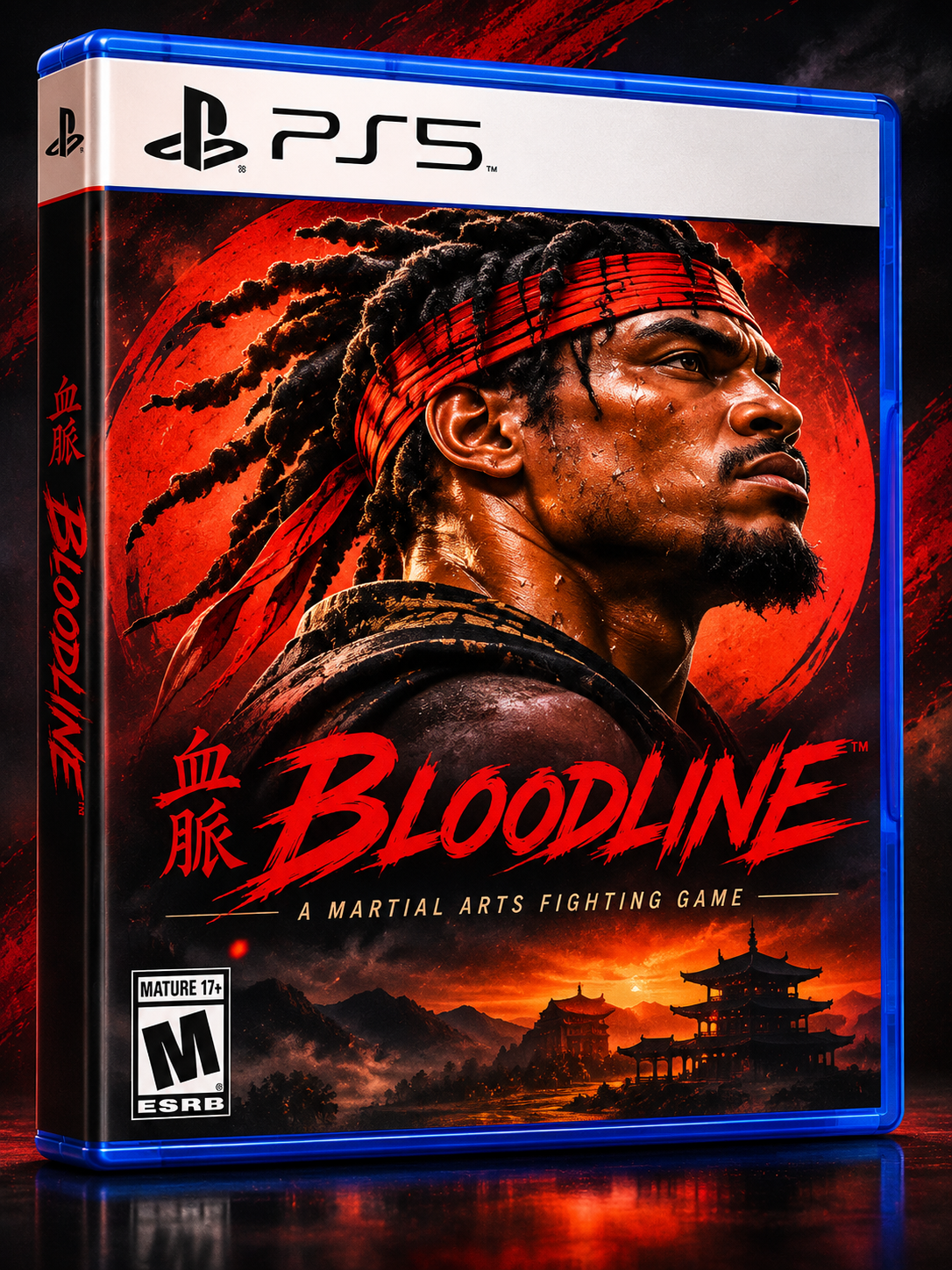
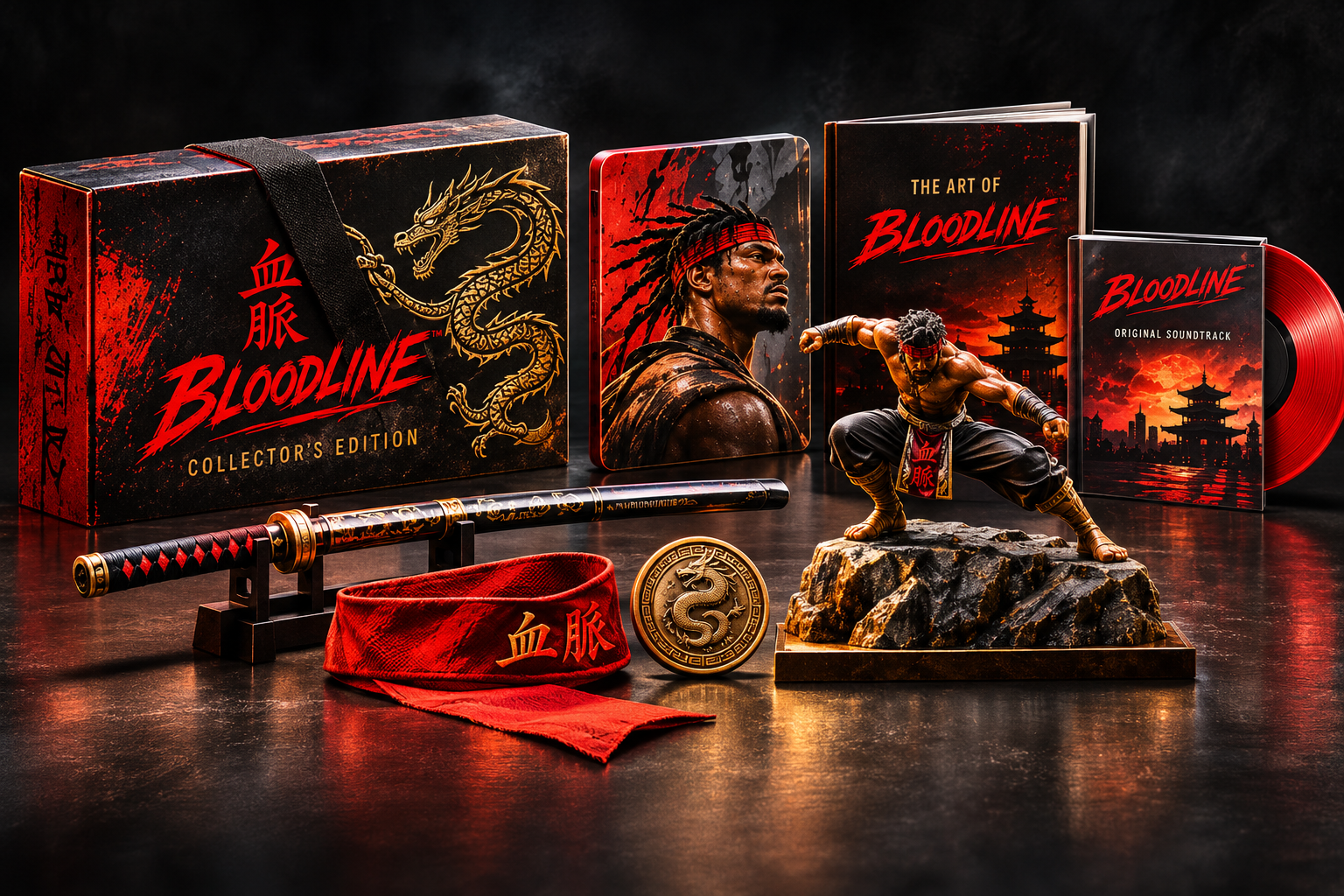
Fictional product visualizations. Printed platform marks and rating badges are placeholders; no platform partnership or commercial release is claimed.
12 / Global advertising campaign
A larger stage
for the same story.
The outdoor direction translates BLOODLINE’s cinematic scale into a city-sized brand encounter. A recognizable protagonist and strong title carry the campaign at a distance.
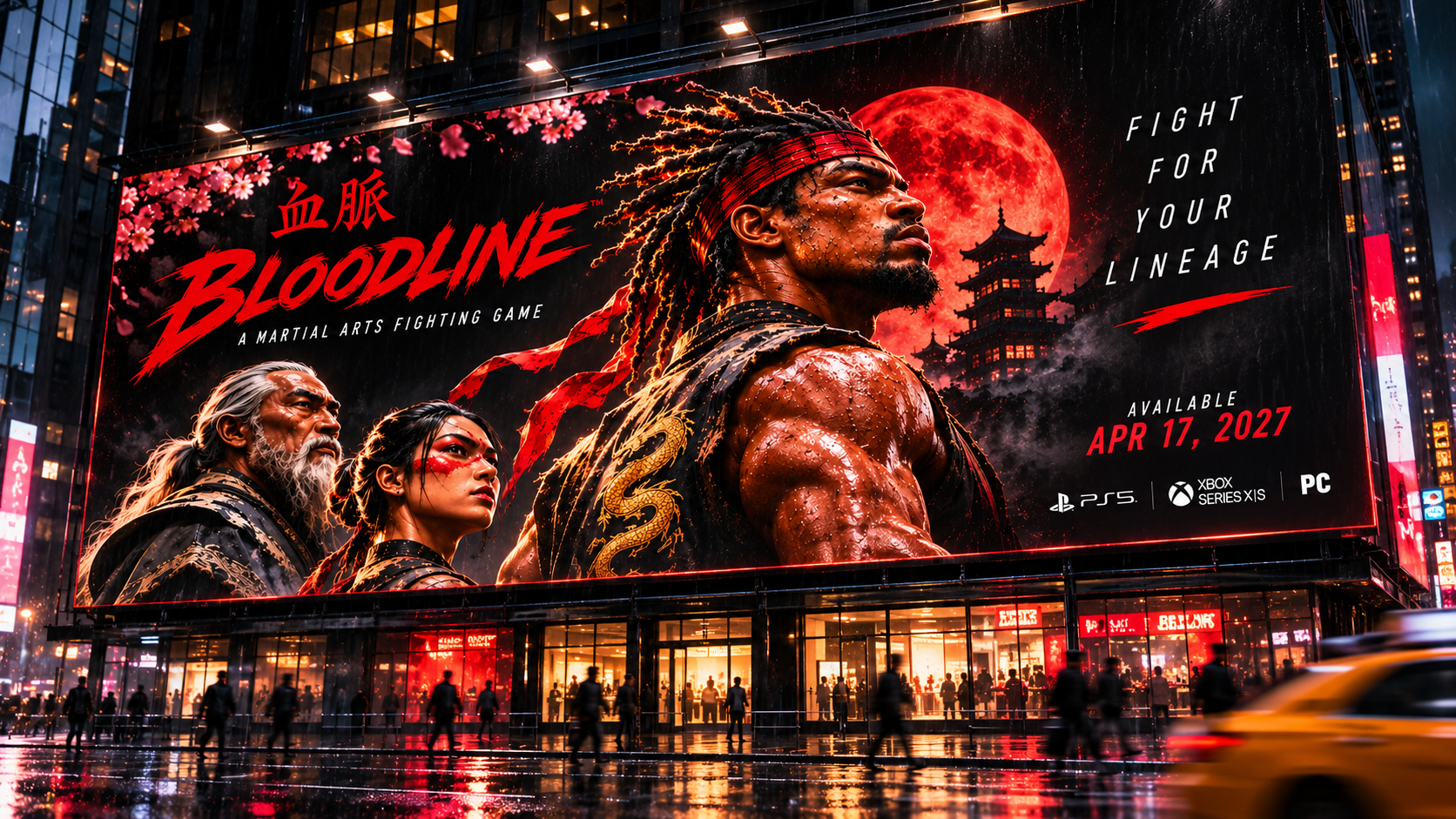
Fictional campaign mockup. The release date and platform marks visible in the artwork are placeholder content, not launch announcements.
13 / Merchandise and apparel
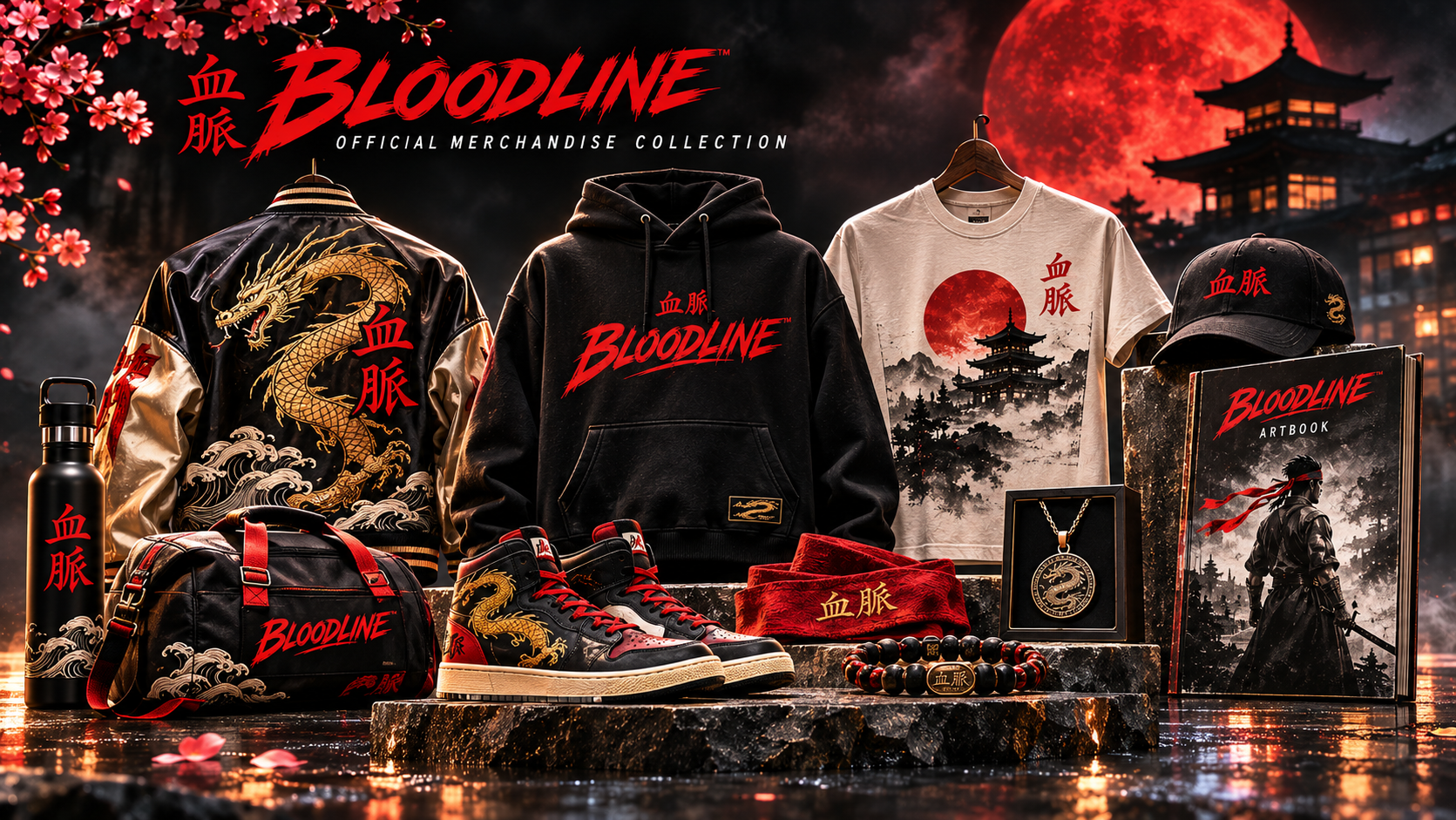
The identity, worn.
Black fabrics, crimson lettering and gold details carry the world into apparel and accessories. The product language remains recognizable across embroidered, printed and illustrated applications.
14 / Soundtrack packaging
The atmosphere
takes another form.
Vinyl and CD packaging extend the visual world into a tactile music format. Character-led covers, red-and-black materials and graphic disc treatments give the soundtrack concept a place within the wider identity.
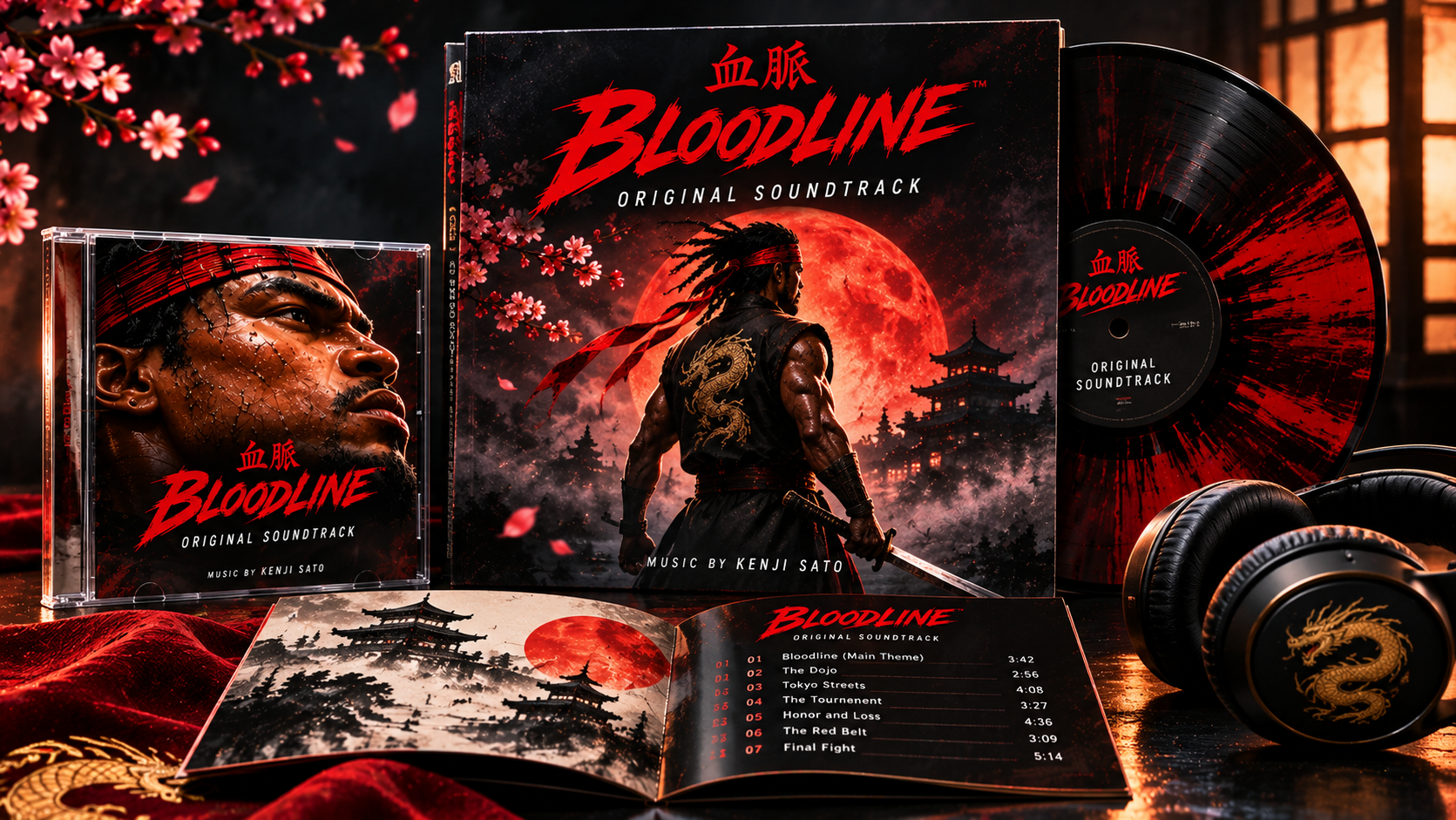
Packaging artwork only. Credits, track titles and durations are illustrative; no music production or soundtrack release is claimed.
15 / Digital experience
The first frame
of a larger world.
The promotional website concept brings the identity together across story, fighters, arenas and collectible applications. Cinematic training imagery brings the discipline behind the story into the promotional direction.
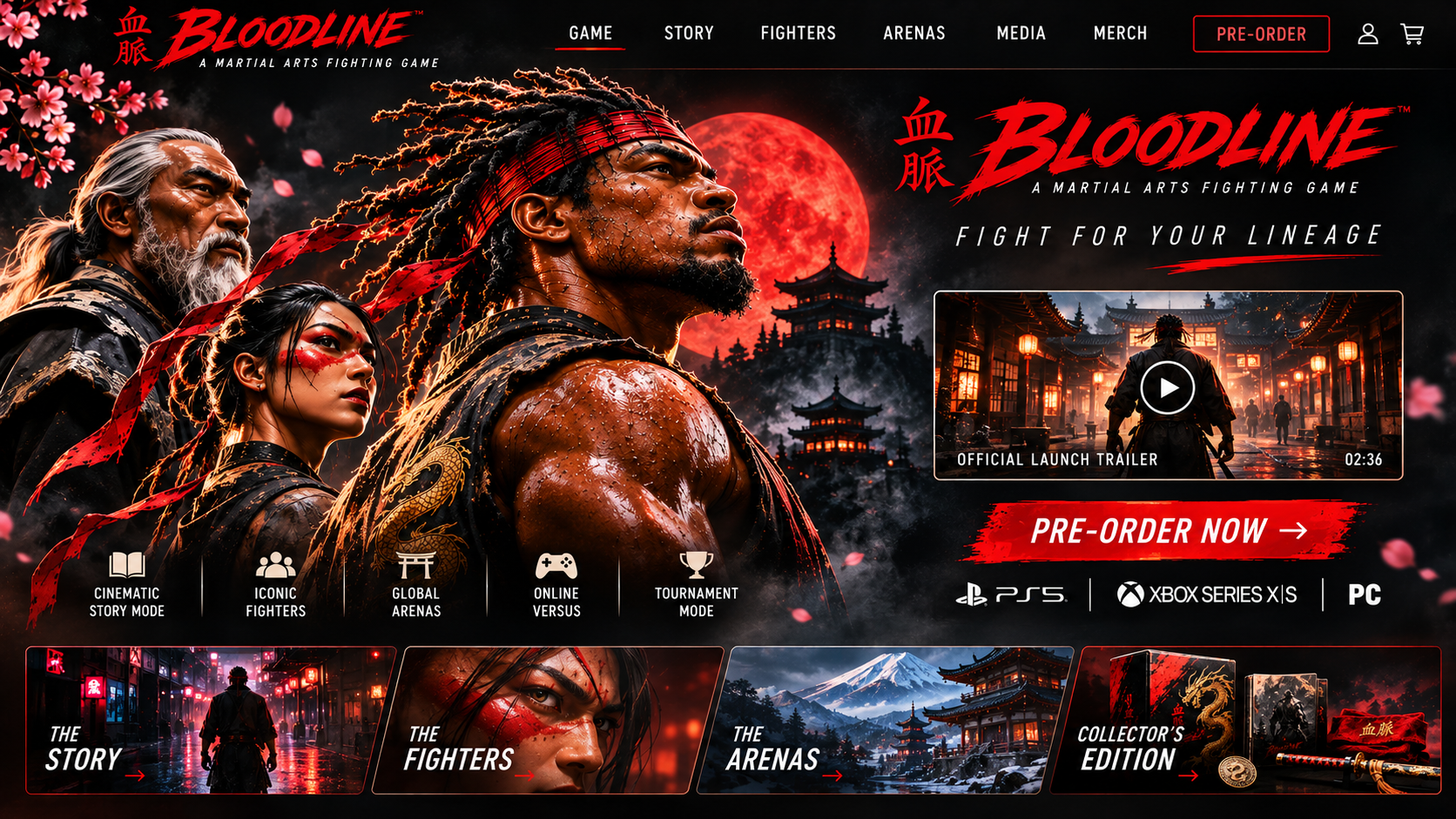
Website and trailer studies are visual concepts. Preorder prompts, platform marks and player controls are illustrative; no live game service, preorder offer or playable trailer is presented.
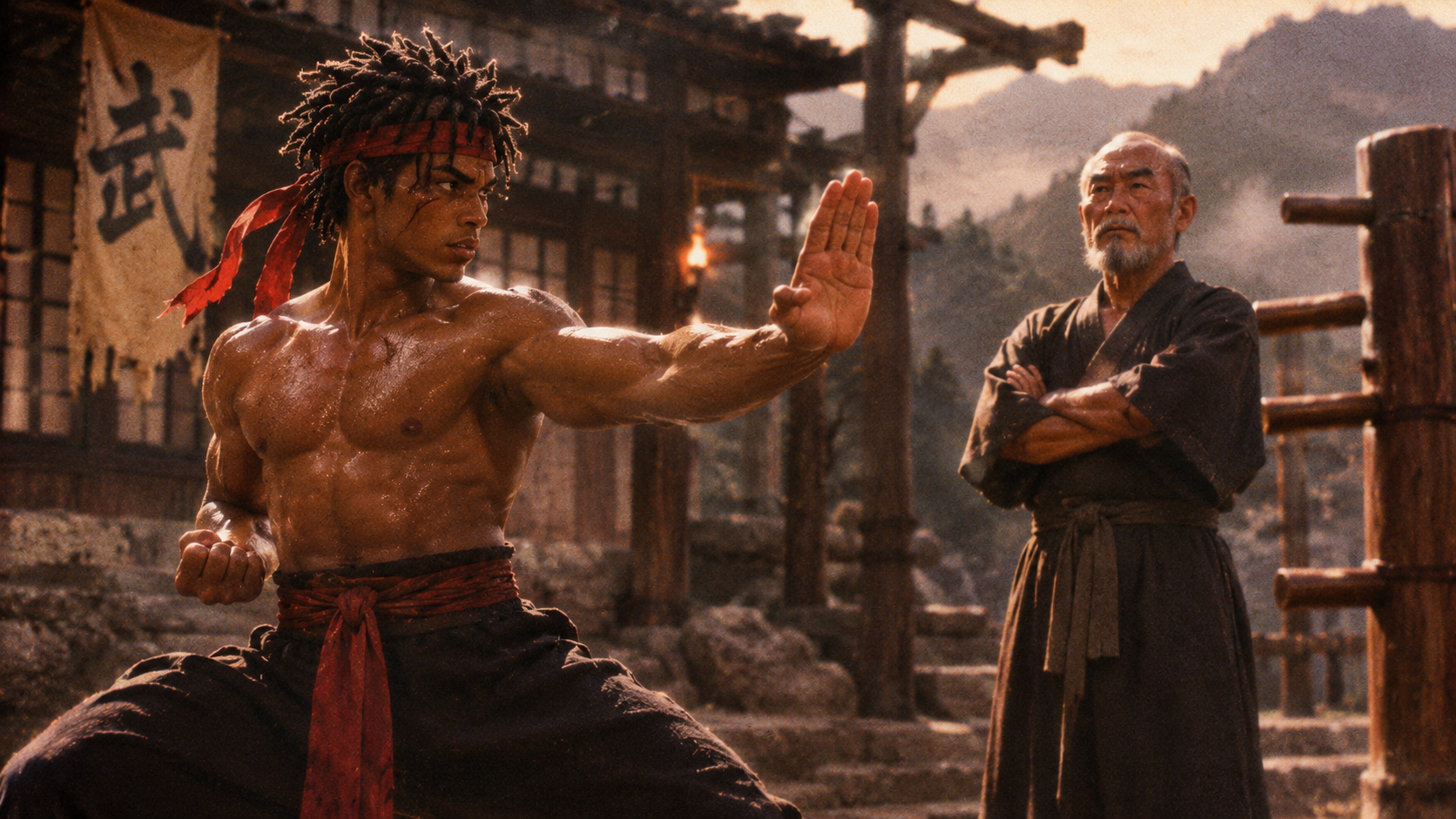
15 / Film art direction
Discipline in every frame.
The cinematic direction brings the protagonist and sensei together through training, atmosphere and shared tradition.
16 / Final cinematic showcase
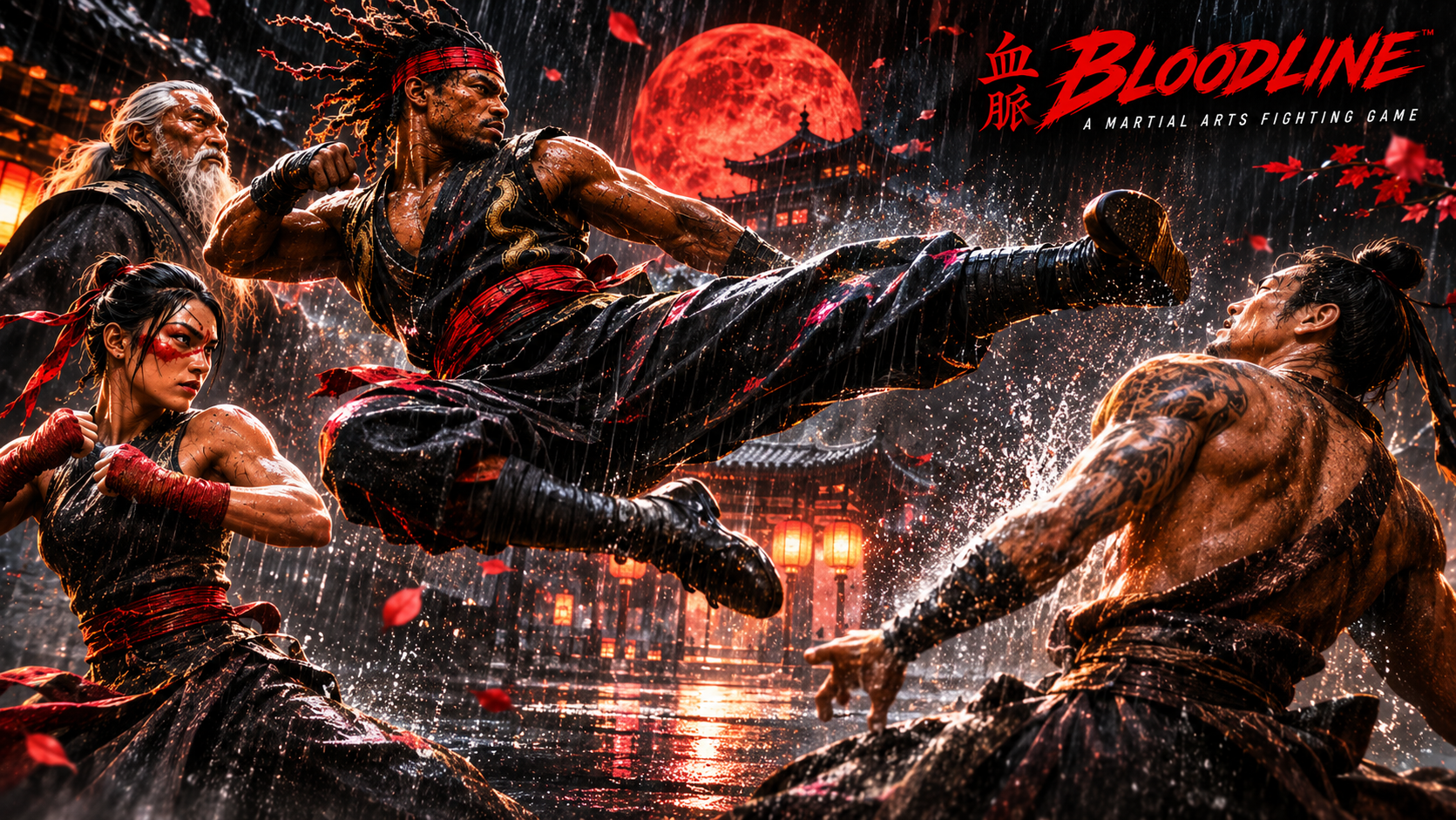
What we choose
to carry forward.
BLOODLINE explores world-building as brand strategy: a conceptual entertainment ecosystem connecting narrative, identity, art direction and product presentation.
The extended story treatment remains in creative development. Character names, the campaign line, final logo details and final-battle imagery are subject to refinement. The sumo champion remains the original final boss.